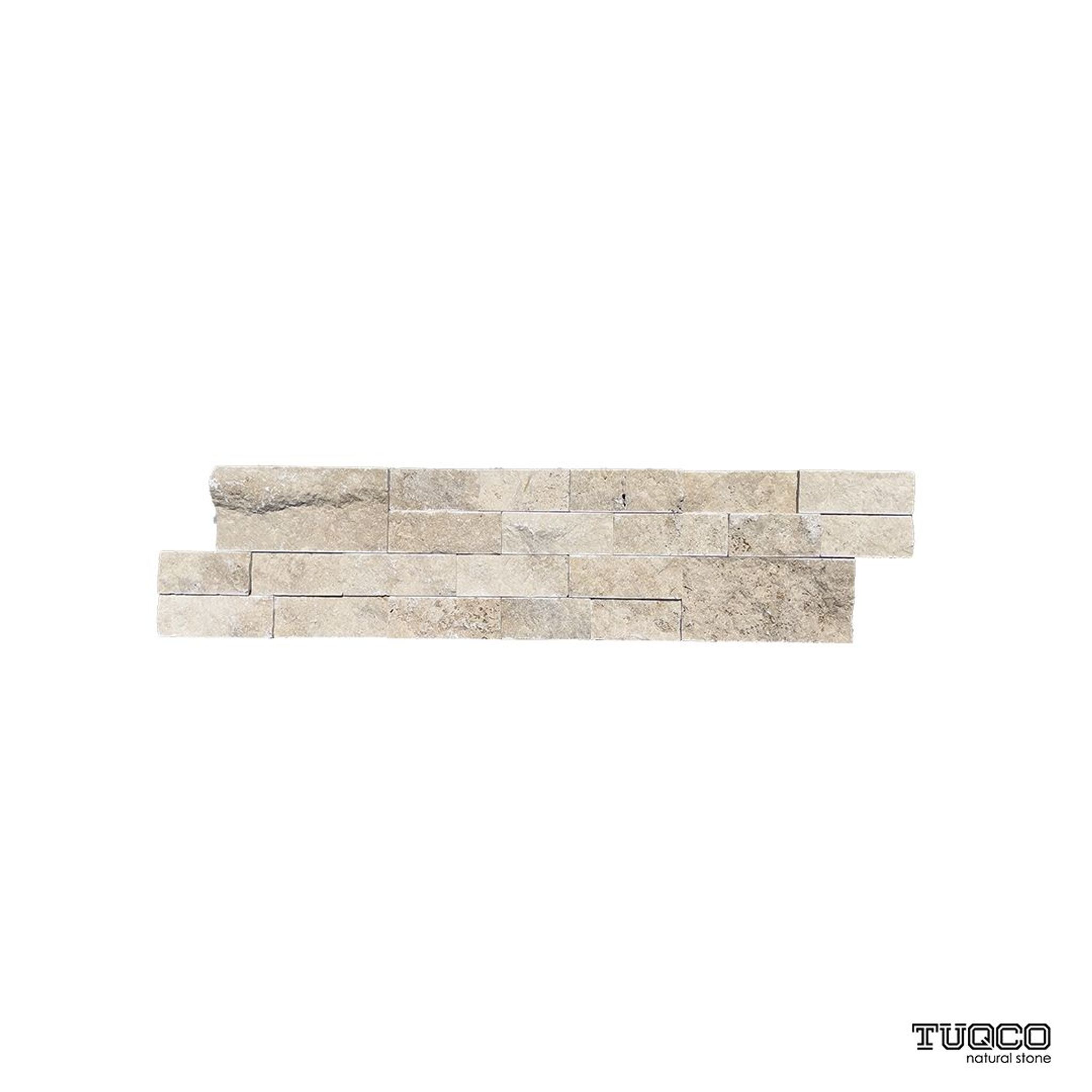
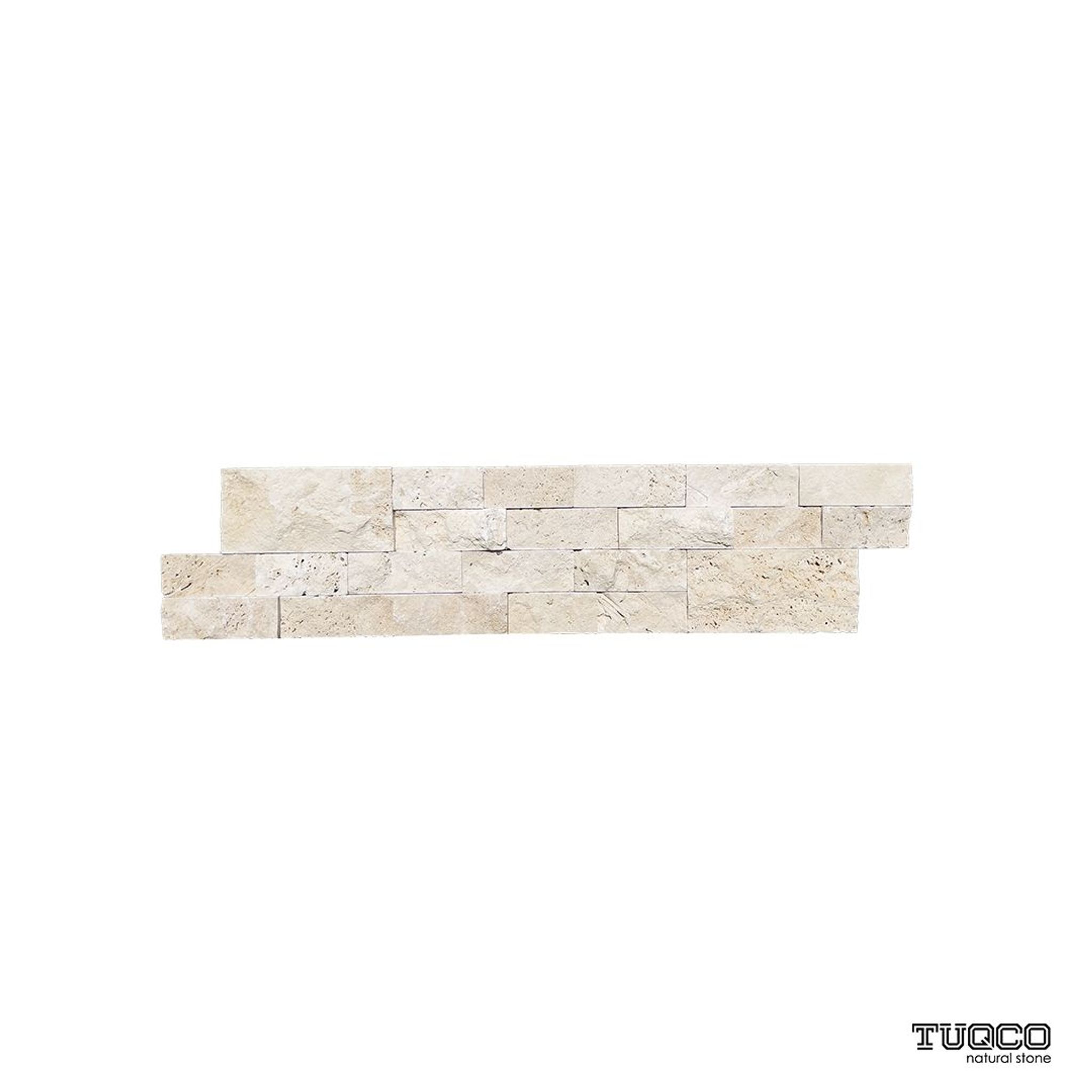
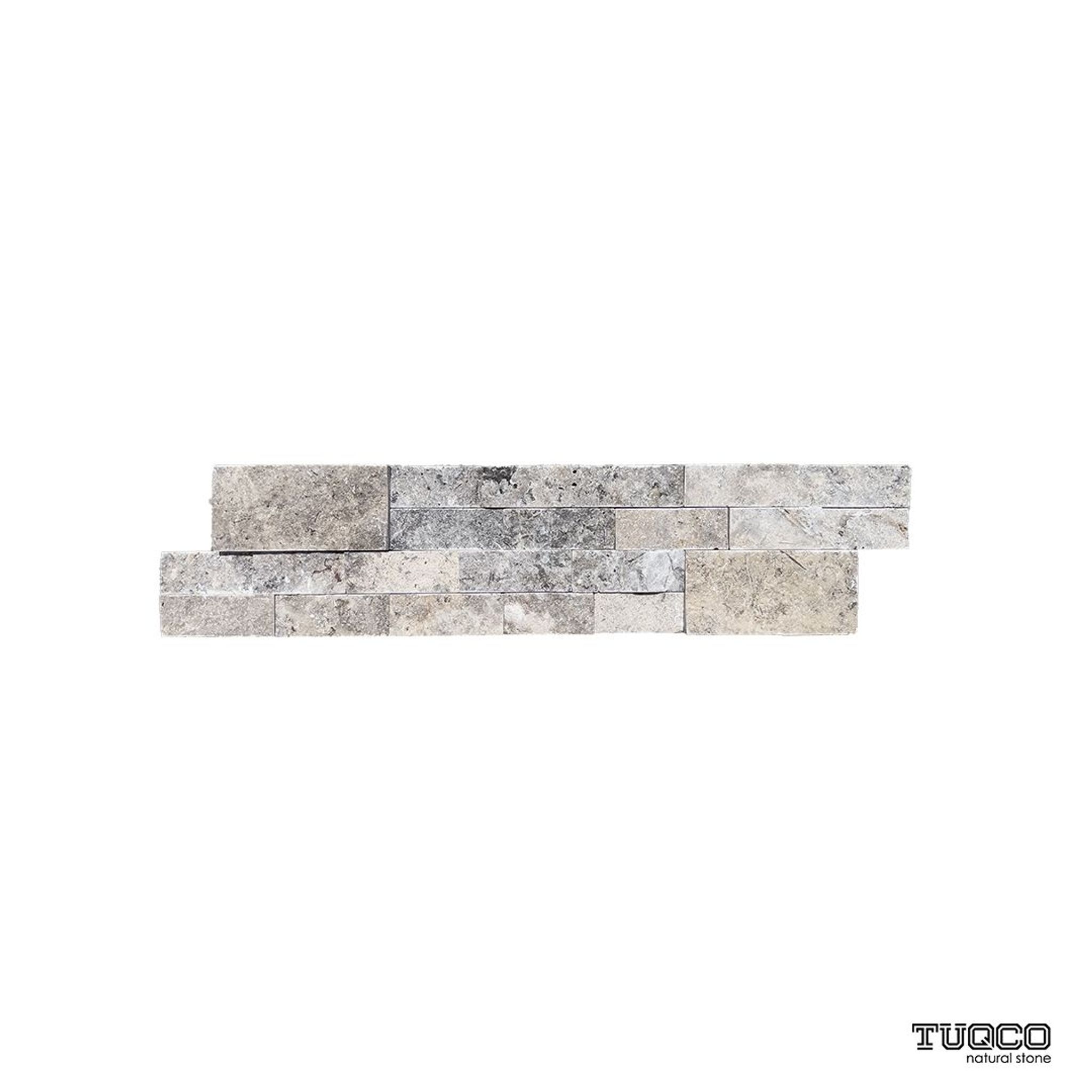
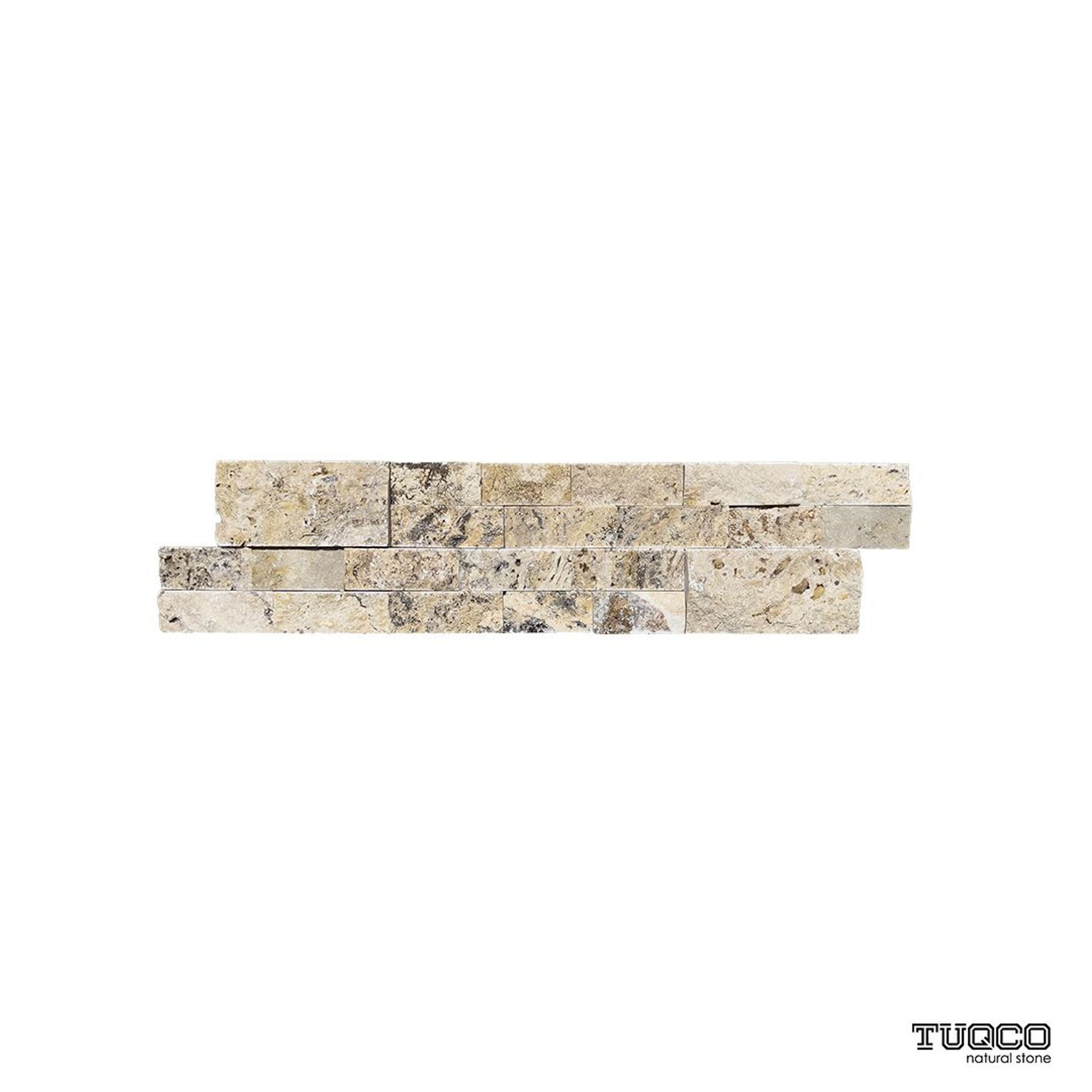
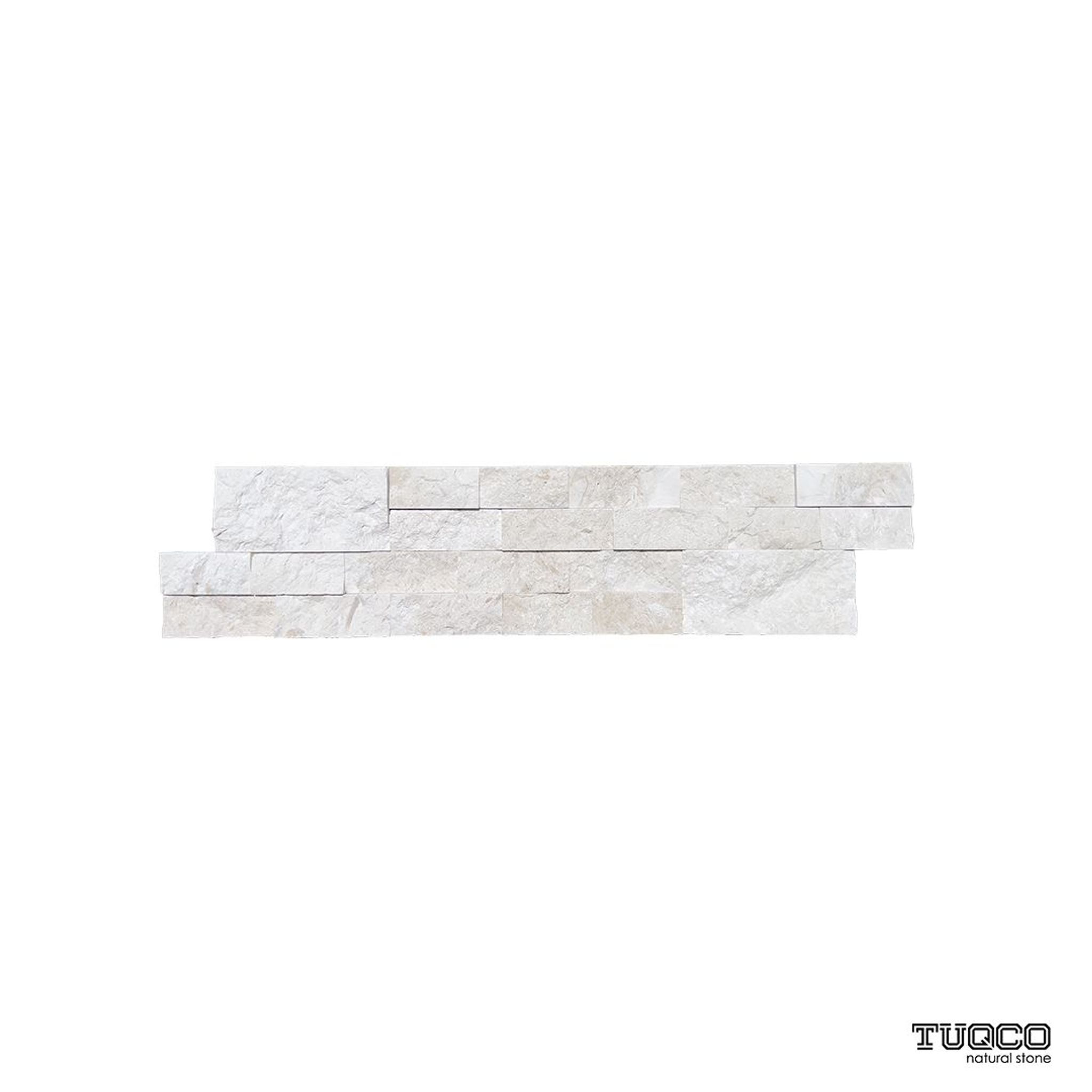
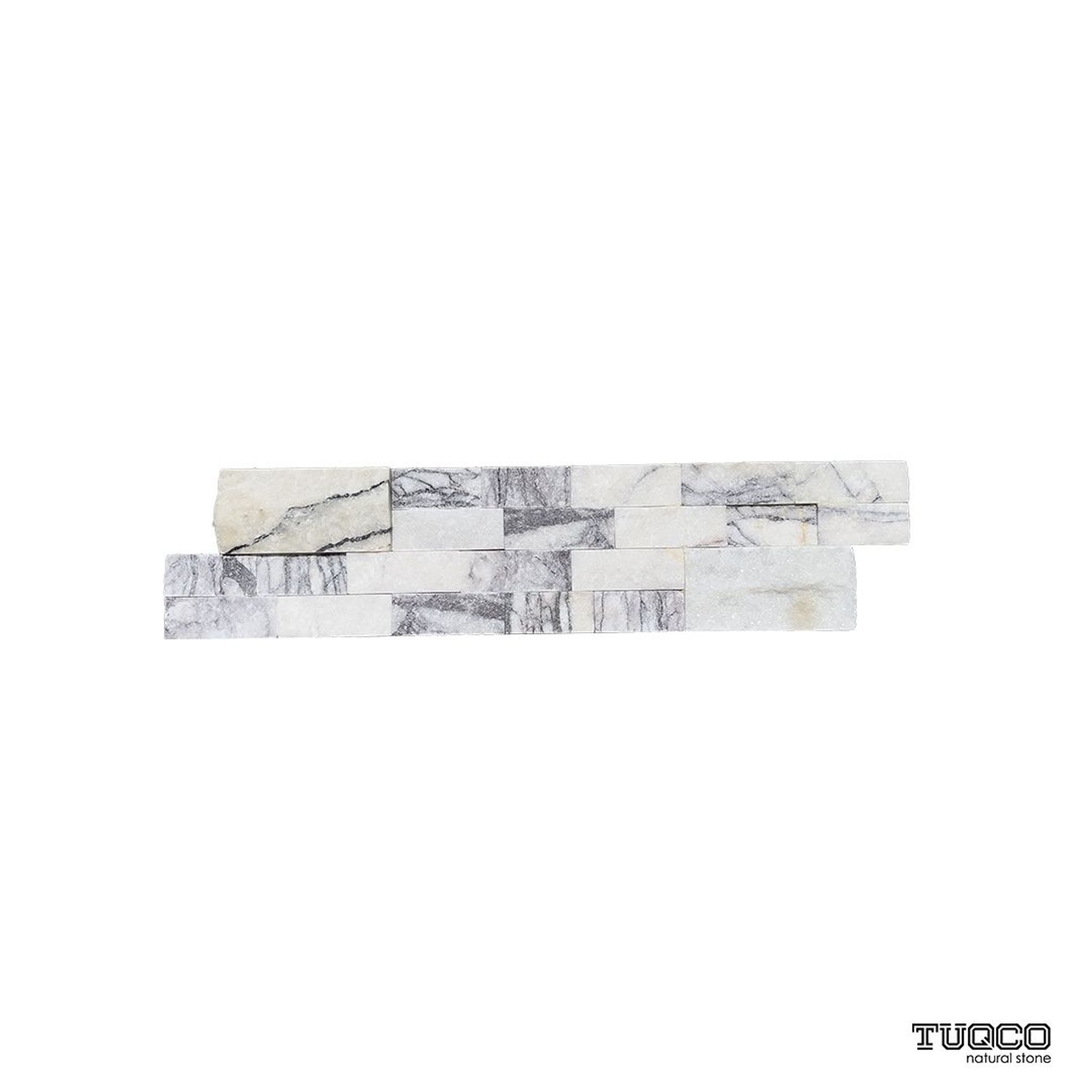
Split face or ledger panel — what is the difference?
The short version
Split face is a rough, three-dimensional stone finish. A ledger panel is a format: narrow stone pieces joined into a ready-made wall panel, usually 152 x 610 mm. Most ledger panels have a split face. About 11 panels cover one square metre, before you add an allowance for cuts and breakage.
What is the difference between split face and a ledger panel?
Split face describes the surface. The stone is split, not sawn, so the face is rough and three-dimensional and catches light and shadow. Ledger panel describes the format: narrow pieces of stone joined into a ready-made panel that is fixed to a wall.
The two terms overlap because most ledger panels have a split face. They are not the same thing, though. A ledger panel can also come in other finishes, and split face stone can be sold as loose pieces or tiles. Ledgestone and stacked stone are other names for the same panel format.
What size is a ledger panel?
The most common size is 152 x 610 mm, or 6 x 24 inches. Other sizes exist, so confirm the size before you work out quantities. Many panels have interlocking ends, so they join without an obvious straight line.
How many ledger panels do you need?
Work from the wall area, not from the number of rows.
| Wall area | Panels needed |
|---|---|
| 1 m² | About 11 |
| 10 m² | About 108 |
| 100 m² | About 1,080 |
| 100 sq ft | About 100 |
Each panel covers about 0.093 m², or 1 sq ft. These figures are calculated from the nominal size, so check the real coverage with your supplier, especially for interlocking panels.
Then add an allowance for cuts and breakage. One supplier suggests 10%. Agree the figure with your installer, because a wall with many openings and corners needs more than a plain one.
How do you deal with corners?
External corners are where a ledger wall looks finished or unfinished. There are two usual options: L-shaped corner pieces, or panels mitred on site. Decide this before ordering, because corner pieces are measured by the length of the corner, not by the wall area.
- Measure the total height of all external corners.
- Deduct that area from the flat panel quantity if you are using corner pieces.
- Approve a corner detail on a sample, so the two faces match.
How are ledger panels fixed?
Fixing depends on the panel, the wall and the location, so follow the panel maker's instructions and the adhesive maker's data. Suppliers commonly specify a high-bond, polymer-modified adhesive on a sound, clean base. Most ledger panels are laid tight, without grout.
Natural stone is heavy, and a panel that falls from a wall is a safety risk. For exterior walls, high walls and public buildings, have the fixing method and the wall build-up confirmed by a qualified engineer and checked against local rules. Do not rely on a general guide, including this one.
Which stone should you choose?
- Travertine: warm colours and strong texture, often used on feature walls and fireplaces.
- Limestone: soft, pale colours and a calm surface.
- Marble: stronger colour and veining, with more contrast across the wall.
Natural stone varies, so mix panels from several crates as you go, and approve a sample range and not a single piece. For outdoor walls in cold climates, choose a dense stone suited to freezing conditions. Agree a sealer if the wall is exposed to water, smoke or grease.
How should you write a ledger panel order?
- Stone, colour range and face finish
- Panel size, thickness and whether the ends interlock
- Corner pieces, by total length
- Total wall area and your allowance
- Packing, and the number of panels per crate
Split face panels from our factory
We produce split face ledger panels in travertine, limestone and marble at our factory in Denizli, Türkiye, for wholesale and project orders, in the size you specify. Tell us the stone, size and total area, and we will quote for your specification. See our split face panels for examples of past production.
Frequently asked questions
- Is split face the same as a ledger panel?
- No. Split face is a rough surface finish, and a ledger panel is a format made of narrow stone pieces joined into a panel. Most ledger panels have a split face, which is why the terms are often mixed up.
- How many ledger panels are in a square metre?
- About 11 panels of 152 x 610 mm cover one square metre, before any allowance for cuts and breakage. Confirm the real coverage with your supplier.
- Can ledger panels be used outdoors?
- Natural stone ledger panels are used on exterior walls, but the stone, the adhesive and the fixing method must suit the site. Have an engineer confirm exterior and high-level work, and choose a stone suited to frost in cold climates.
- Do ledger panels need grout?
- Most are laid tight without grout. Follow the instructions for the panel you are using.