
Filled or unfilled travertine — which should you specify?
The short version
Filled travertine has its natural holes closed with cement or resin and ground smooth. Unfilled travertine keeps them open for a natural texture. Filled suits interior floors, bathrooms and polished surfaces. Unfilled suits feature walls and rustic designs. Outdoors, decide by climate and the stone, and approve the result on a sample.
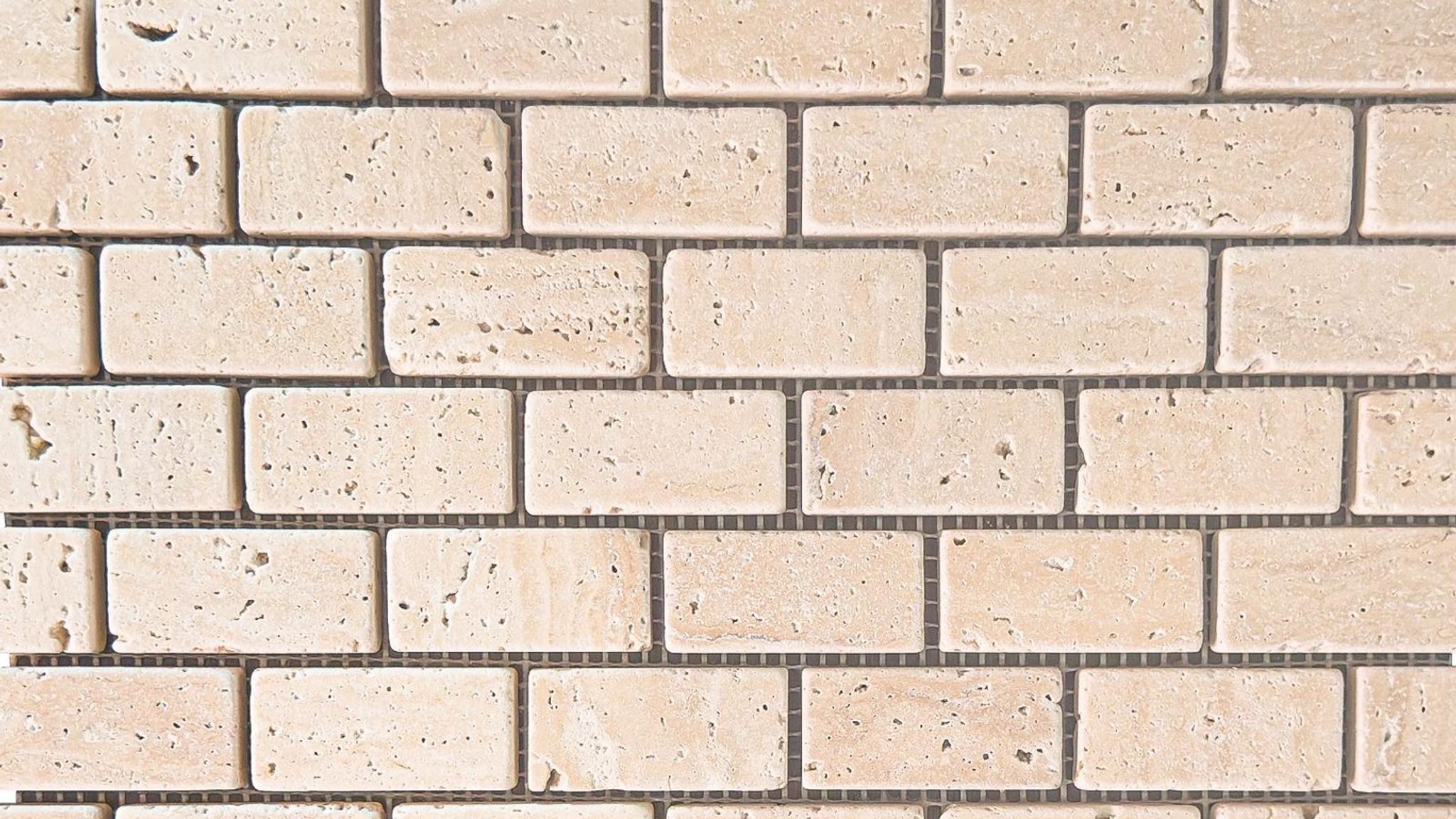
What is the difference between filled and unfilled travertine?
Travertine has natural holes, formed as the stone was deposited. Filled travertine has these holes closed at the factory and the surface ground smooth. Unfilled travertine keeps them open, so the face has a natural, textured look.
| Feature | Filled | Unfilled |
|---|---|---|
| Surface | Smooth and closed | Open holes and texture |
| Look | Even and refined | Natural and rustic |
| Dirt and spills | Easier to wipe clean | Can collect in the holes |
| Upkeep | Fill may need repair over time | Holes need more cleaning |
| Later changes | Fill is already in place | Holes can be filled on site |
What is travertine filled with?
The two main types are cement-based and resin-based fillers. Resins include polyester and epoxy.
Cement filling is the more common and lower-cost method. A study in Construction and Building Materials notes its weak points: it sets slowly, it can shrink while it hardens, and micro cracks can form. Good mixes and additives can reduce these problems, so the quality of the work matters as much as the material.
Resin is the usual choice on polished surfaces. Ask which filler is used, because it affects the look, the repair method and how the surface wears.
Does filling make travertine stronger?
It can improve some properties, but do not treat it as a structural fix. A study in Geotechnical Engineering tested cement, mastic, polyester and epoxy fills, and found that they improved the physical and mechanical properties of the stone at different rates.
That result came from laboratory specimens. The stone itself still decides most of the performance, so choose the stone first and the fill second.
Which should you choose for your project?
- Interior floors in hotels and commercial buildings: filled is the usual choice, because the surface is smooth and easier to clean.
- Bathrooms and kitchens: filled, so that dirt and water do not gather in the holes.
- Polished surfaces: filled, because open holes interrupt a polished face.
- Feature walls and rustic interiors: unfilled works well where the texture is the point and there is no foot traffic.
- Exterior paving and pool areas: both are used, and the right answer depends on the climate and the stone.
Should outdoor travertine be filled or unfilled?
Sources disagree. Some suppliers prefer unfilled stone outdoors, because water can drain from the open holes. Others prefer filled stone in cold climates, because water that freezes in open holes can damage the surface. We did not find an independent test that settles the question.
In a frost climate, choose a dense stone suited to freezing conditions, build a base that drains, and follow your installer's advice. In a mild climate, the decision is mainly about appearance, comfort underfoot and cleaning.
Why does the fill come out of travertine?
Fill can wear, shrink or crack over time, and new holes can open as traffic wears the surface. This does not mean the stone has failed. It is normal upkeep for filled travertine, and small areas can be repaired with a colour-matched filler.
To reduce it, check the filled face on a sample, choose a filler that suits the use, and agree a cleaning and sealing plan. Keep a small stock of matching filler or spare tiles for a large project.
How should you write filling into a specification?
"Filled travertine" alone leaves too many decisions to the supplier. State these points.
- Filled or unfilled, and on which faces
- Filler type: cement-based or resin
- Filler colour, matched to the stone or contrasting
- Finish, such as honed, polished, tumbled or brushed
- The acceptable amount of open holes, shown on an approved sample
Filling and cut direction work together, because cross cut stone can show more voids on its face. See our guide to vein cut and cross cut travertine.
For where travertine works best overall, see the pros and cons of travertine.
Ordering travertine for a project
We produce travertine at our factory in Denizli, Türkiye, for wholesale and project orders, and supply it filled or unfilled. Tell us the fill, the filler colour, the finish, the size and the total quantity, and approve the result on a sample before production starts. See travertine from Turkey for what we can produce.
Frequently asked questions
- What is travertine filled with?
- Usually a cement-based or resin-based filler. Cement is the more common and lower-cost option, and resins such as polyester and epoxy are the usual choice on polished surfaces.
- Can unfilled travertine be filled after installation?
- Yes. Holes can be filled on site, but matching the colour and finish across a large area is harder than filling at the factory. Test a small area first.
- Does filled travertine need sealing?
- Yes. Filling closes the holes but does not stop the stone absorbing liquids, so seal filled and unfilled travertine according to the use and the sealer maker's advice.
- Is unfilled travertine harder to clean?
- Usually, because dirt and water can collect in the open holes. That matters most on floors, in bathrooms and in kitchens.
Sources
- Isik, E. C., Ozkahraman, H. T. (2010). An economic solution to high quality travertine filling. Construction and Building Materials, 24(12), 2619-2627
- Karaca, Z. (2009). Effect of filling materials on physical and mechanical properties of travertine. Proceedings of the Institution of Civil Engineers: Geotechnical Engineering, 162(5), 287-291
- Floor & Decor, What is filled and unfilled travertine?