
What are the pros and cons of travertine?
The short version
Travertine is a warm, varied natural stone with many finishes and formats, grip in tumbled or brushed faces, and a surface that can be re-honed and resealed instead of replaced. Its drawbacks: acids etch it, it absorbs liquids and needs sealing, it scratches more easily than porcelain, its holes need filling or cleaning, and it needs care in hard frost.
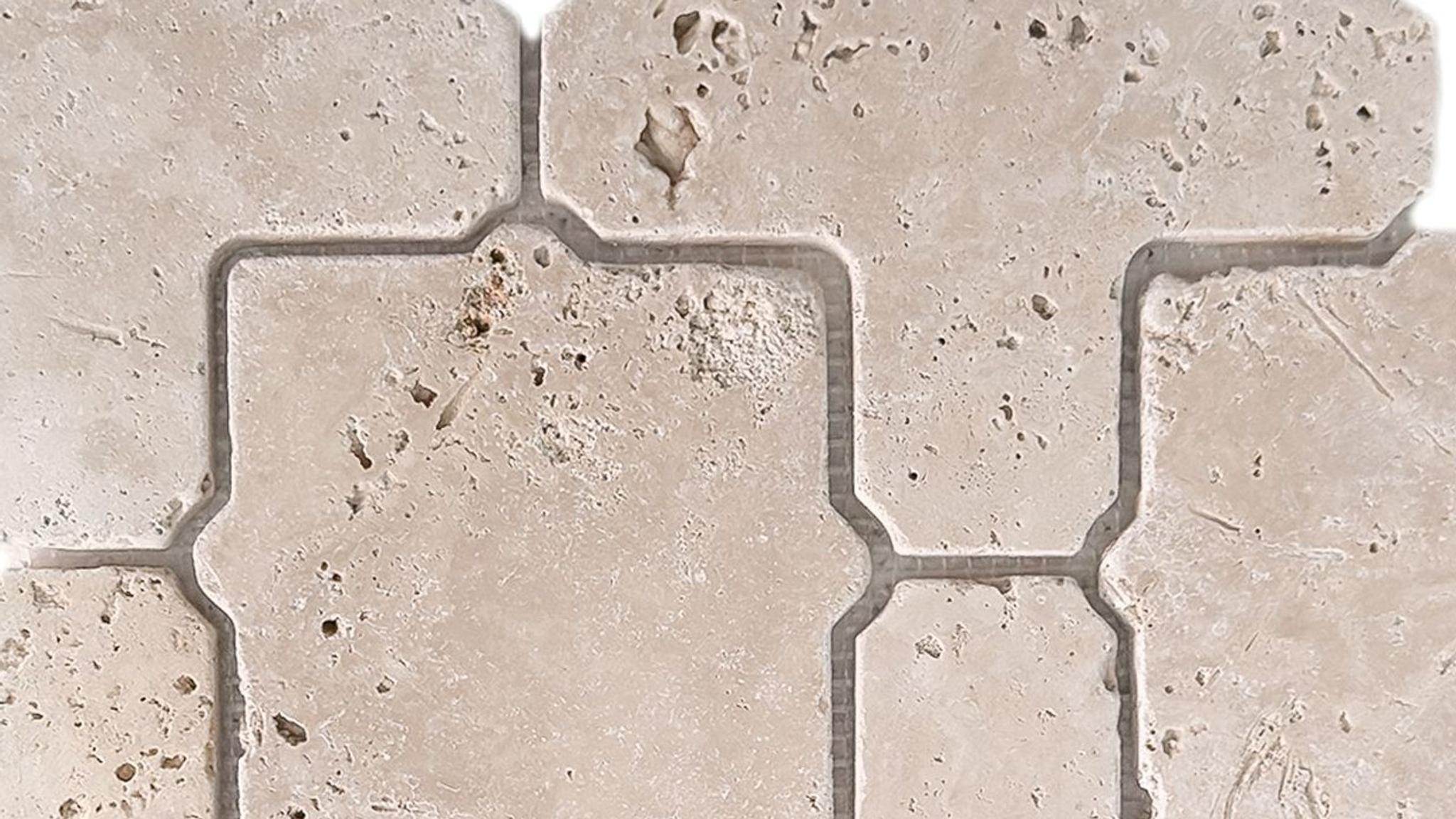
What are the pros and cons of travertine at a glance?
Travertine is a form of limestone laid down by mineral springs. Its strengths and weaknesses both come from that: a warm, varied, textured stone, but a soft and fairly porous one that reacts to acids. This guide covers travertine tiles, mosaics and paving.
| Pros | Cons |
|---|---|
| Every piece is different, in colours from ivory and beige to walnut, dark brown and grey | Acids such as lemon juice, vinegar and many cleaners etch the surface, sealed or not |
| Many finishes from one stone: honed, polished, tumbled and brushed | Absorbs liquids, so it needs a penetrating sealer, renewed over time |
| Tumbled and brushed faces give grip outdoors and in wet areas | Natural holes: open ones collect dirt, and fill can wear and need touching up |
| Comes as tiles, mosaics, pavers, French pattern sets and split face panels | Soft: about 3 on the Mohs scale, so it scratches more easily than porcelain or granite |
| Can be cleaned, re-honed, refilled and resealed instead of replaced | Heavier than porcelain: a 30 mm stone paver weighs more than a 20 mm porcelain one |
| Works on floors and walls inside and on patios and pool decks outside | Needs care in hard frost: a dense stone and a base that drains |
Where does travertine work best?
| Location | Verdict | What to specify |
|---|---|---|
| Living areas, hallways, hotel and office floors | Works well | Filled and honed; sealed; mats at the entrances |
| Kitchen floors | Works, with care | Filled and honed; sealed; acidic spills wiped up quickly |
| Bathrooms and showers | Works well | Filled; honed or tumbled on the floor; waterproofing and slope behind the stone |
| Patios and paths | Works well | Tumbled or brushed pavers, usually 25 to 30 mm thick, on a proper base |
| Pool decks | Works well | A finish with grip; a sealer suited to the pool water; coping specified with the deck |
| Climates with hard frost | Choose with care | A dense stone, a base that drains, and a clear decision on filling |
| Feature walls and façades | Works well | Split face, mosaic or tile; exterior fixing designed by an engineer |
| Polished floors with heavy traffic | Not ideal | Polished shows scratches and etching; honed hides wear |
Is travertine durable?
Yes, in the right place and finish. Travertine has been used for floors, paving and walls for a very long time, and a well-laid floor lasts for decades. What it does not resist well are acids and grit: acids etch it, and sand underfoot slowly wears a polished face.
Its other strength is that it can be restored. A worn, dull or etched travertine floor can be deep-cleaned, re-honed, refilled where the fill has worn and resealed by a stone restorer. Porcelain cannot be refinished that way.
Is travertine high maintenance?
It needs more care than porcelain, but the routine is simple:
- Dust-mop or sweep often, because grit wears the surface.
- Clean with a pH-neutral stone cleaner or mild soap, never with vinegar or acidic cleaners.
- Wipe up spills quickly, especially acidic ones.
- Reseal when water drops start to darken the stone instead of beading.
Our guide to cleaning covers stains, etch marks and mould.
Our guide to sealing covers sealers and when to reseal.
Does travertine stain or scratch easily?
- Stains: unsealed travertine absorbs oil, coffee and wine. A penetrating sealer slows that and gives you time to wipe a spill up.
- Etching: acids leave dull marks that look like stains but are damage to the surface. Sealing does not prevent them.
- Scratches: at about 3 on the Mohs scale, travertine scratches more easily than porcelain or granite. Honed and tumbled faces hide scratches far better than polished.
Is travertine slippery?
It depends on the finish. Polished travertine is slippery when wet and does not belong on wet floors. Honed travertine suits most indoor floors, and on a shower floor works best as a mosaic or small format. Tumbled or brushed travertine gives good grip around pools and in showers. For the slip benchmarks specifiers use, see travertine, marble and limestone in showers.
Filled or unfilled?
Indoors, filled travertine is the usual choice, because open holes collect dirt and water. Outdoors, sources disagree: open holes drain, but in hard frost water can freeze in them. Our guide to filled and unfilled travertine sets out both sides.
Is travertine good outdoors?
Yes. It is one of the most common stones for patios, paths and pool decks. Choose a tumbled or brushed finish for grip, a paver thickness for paving, a breathable exterior sealer, and in hard-frost climates a dense stone on a base that drains.
Laying it? See our guide to installing travertine pavers.
Is travertine expensive?
It covers a wide range. Price depends on the colour, the grade, the format, the finish and whether the stone is filled, and freight weighs more for stone than for porcelain. Compare quotes for the same size, thickness and finish, and compare the landed cost rather than the price per square metre alone.
Is travertine the right stone, or is there a better alternative?
- Marble or travertine: marble is denser and takes a high polish; travertine is warmer and more textured.
- Marble pros and cons: the same questions answered for marble tile and mosaic.
- Travertine or limestone: limestone is usually finer and more even.
- Travertine or porcelain pavers: porcelain needs less upkeep; travertine is natural stone.
- Turkish travertine colours: Classic, Light, Noche, Walnut, Silver and blends.
Travertine from our factory
We produce travertine tiles, mosaics, pavers, French pattern sets and split face panels at our factory in Denizli, Türkiye, filled or unfilled, in honed, polished, tumbled or brushed finishes, for wholesale and project orders. Tell us the colour, format, finish and total area, and we will quote for your specification. See travertine from Turkey for examples of past production.
Frequently asked questions
- What are the disadvantages of travertine?
- It etches with acids, absorbs liquids and needs sealing, scratches more easily than porcelain or granite, and its natural holes either collect dirt or, when filled, need occasional touching up. It is also heavier than porcelain.
- Is travertine good for outdoor use?
- Yes. It is widely used for patios, paths and pool decks. Use a tumbled or brushed finish for grip, a paver thickness, a breathable sealer and, where there is hard frost, a dense stone on a base that drains.
- Is travertine good for kitchen floors?
- Yes, filled and honed, and sealed. Wipe acidic spills such as juice, wine and vinegar up quickly, because acids etch the surface.
- Does travertine scratch easily?
- More easily than porcelain or granite: it is about 3 on the Mohs scale. Honed and tumbled finishes hide scratches better than polished.
- Is travertine slippery when wet?
- Polished travertine is. Tumbled and brushed travertine give good grip, which is why they are used around pools and in showers.
- Can travertine be restored?
- Yes. A stone restorer can deep-clean, re-hone, refill and reseal worn or etched travertine, which is one of its main advantages over porcelain.