
How do you install travertine pavers?
The short version
Lay travertine pavers loose on about 25 mm (1 in) of sand over a compacted crushed stone base held by edge restraints, or bond them on mortar over a sound concrete slab. In the UK, natural stone paving is usually wet laid on a full mortar bed. Build in a fall, never plate-compact the stone, and seal it once it is dry.
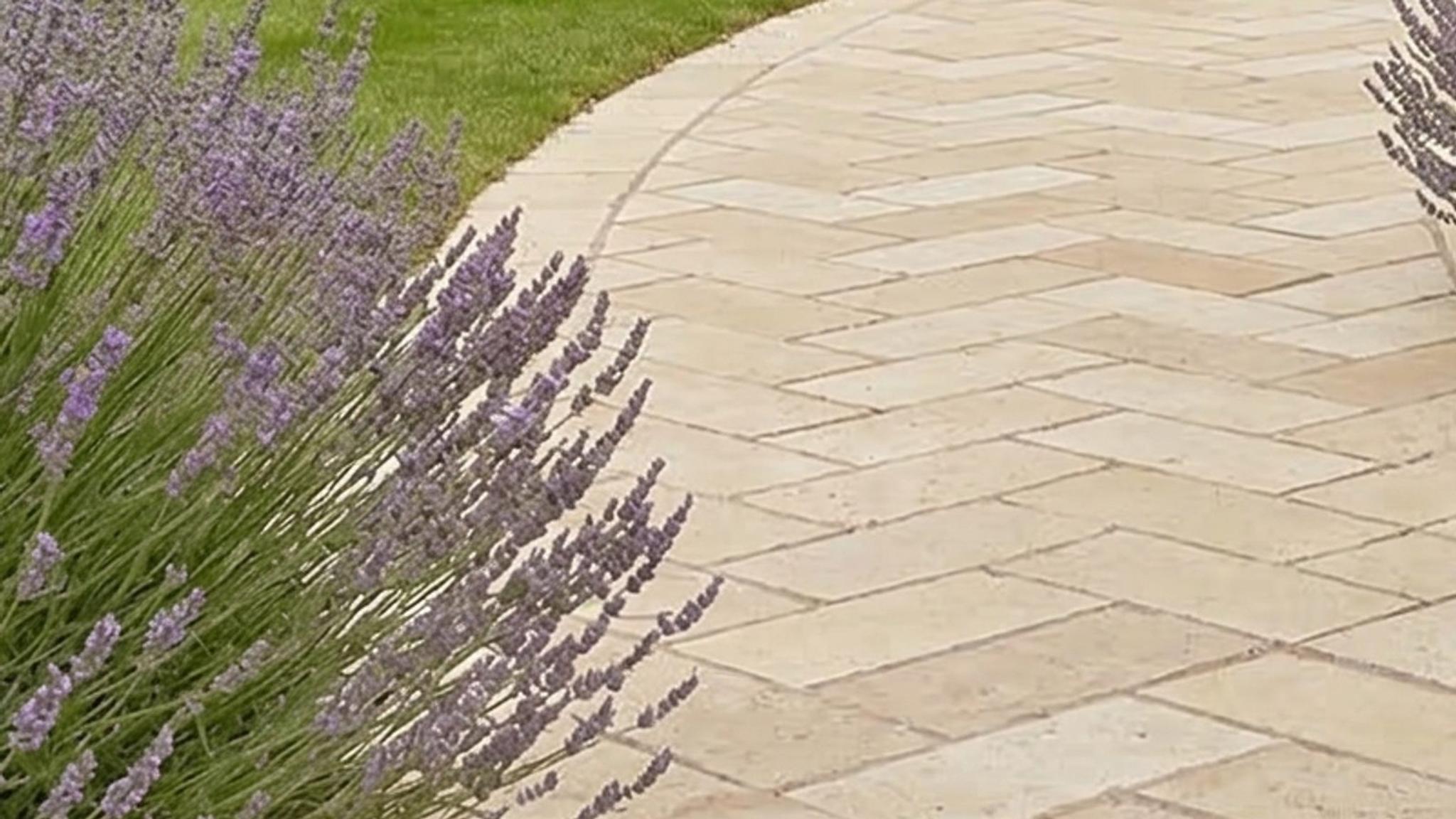
Which installation method should you use?
Travertine pavers are laid either loose on a bed of sand, or bonded on mortar. The ground, the climate, any existing concrete and local practice decide which one suits the job.
| Method | What goes underneath | Suits | Watch for |
|---|---|---|---|
| Sand set (dry lay) | Compacted crushed stone base, about 25 mm (1 in) of bedding sand, edge restraints | Patios, paths and pool decks on stable, well-drained ground | Edges must be held; base depth depends on soil and frost |
| Mortar set over concrete | A sound concrete slab and a mortar bed with a bonding agent | Existing slabs, and areas that need a rigid surface | Slab cracks and joints carry through to the paving |
| Sand over concrete | A sound slab with drain holes, about 25 mm (1 in) of sand, edge restraints | Foot traffic over an existing slab | Raised finished level at doors and steps |
| Wet lay (UK practice) | Compacted Type 1 sub-base and a full mortar bed, with primer on the back of each paver | Patios and terraces in the UK | Never lay on dots or dabs of mortar |
Pavers 25 to 30 mm (1 to 1 1/4 in) thick are the usual choice for a sand bed. Thinner pieces are usually bonded to concrete, so ask your installer before laying anything thinner on sand.
How do you lay travertine pavers on sand?
- Set the levels first. Plan a fall so water runs away from buildings and the pool, and check that the finished surface sits low enough at doors and damp-proof courses.
- Dig out and compact the soil underneath. On soft ground, a geotextile under the base helps keep the layers apart.
- Build the base from crushed stone, compacted in thin layers. Depth depends on the soil, the frost and the load: Marshalls gives at least 100 mm (4 in) of sub-base for most domestic patios, while Cambridge Pavers, a US paver maker, recommends digging out 8 to 12 in in total for natural stone patios and walkways. Your installer should set it for the site.
- Fix edge restraints around the area. Without them, sand-set pavers creep outwards and the bedding washes out.
- Spread about 25 mm (1 in) of coarse, washed concrete sand and screed it level. Do not use the bedding layer to fill dips in the base.
- Lay the pavers on the screeded sand, mixing pieces from several crates, and tap each one level with a rubber mallet. Do not run a plate compactor over natural stone or travertine.
- Fill the joints. Travertine pavers are often laid close together with fine sand swept in. If you use polymeric sand, check the minimum joint width its maker asks for.
Can you install travertine pavers over concrete?
Yes, if the slab is sound. Cracks are acceptable as long as the slab is not moving or heaving. Water must run off the slab, not pool on it, and the extra height of bedding and paver must still fit under door thresholds.
- Mortar set: bed the pavers on a mortar layer of about 25 mm (1 in), with a bonding agent on the slab or in the mortar. Carry the slab's control and expansion joints up through the paving, and use a mortar system made for exterior natural stone.
- Sand over concrete: lay about 25 mm (1 in) of bedding sand on the slab, drill drain holes at its low points so water in the joints can escape, and fix edge restraints. This suits foot traffic; areas that take vehicles need a stronger edge and bedding detail.
If mortar dries on the face of the stone, do not clean it off with hydrochloric (muriatic) acid. Acid etches travertine. Wipe mortar off with a damp sponge while it is fresh, and use cleaners made for natural stone.
How do you lay travertine around a pool?
- Pool coping is a separate item. Set it first to the pool builder's detail, and leave the flexible joint between the coping and the deck that the pool builder specifies.
- Lay the deck with a fall away from the pool and towards the drains.
- Choose a finish that grips when wet, such as tumbled or brushed, and follow local rules for slip resistance.
In climates with hard frost, water can collect in the open holes of travertine and freeze. Many contractors in the north-eastern US fill the holes for that reason. See our guide to filled and unfilled travertine.
Around salt-water pools, use a breathable sealer suited to salt. See our guide to sealing travertine.
How do you lay French pattern travertine pavers?
The base and bedding are the same as for any paver. The difference is the layout: work from a straight edge, follow the layout drawing, and lay a section out dry before you fix it.
- Avoid long, straight joints running across the area.
- Spread the sizes evenly, so the small pieces do not gather in one place.
- Open several crates at once and mix the pieces as you lay.
For the sizes in a set and how many sets to order, see our guide to French pattern travertine.
How do you wet lay travertine paving in the UK?
In the UK, natural stone paving is usually laid rigid on a full bed of mortar. Marshalls gives these points in its natural stone paving guide:
- Sub-base: at least 100 mm of well-graded Type 1, laid in layers of no more than 75 mm, each fully compacted.
- Bed: a full, wet mortar bed of 1 part cement to 3 or 4 parts sharp sand, laid 30 to 40 mm thick, which settles to about 25 mm when the paving is tapped down.
- Primer: a slurry primer on the back of each paver, to help the bond and stop marks drawing through to the face.
- Falls: at least 1 in 80 along the paving and 1 in 40 across it.
- Level: the finished surface at least 150 mm below the damp-proof course of any building.
- Joints: fill with a mortar or an exterior jointing compound. Never brush a dry or semi-dry sand and cement mix into the joints, which stains the paving.
- Weather: do not lay below 3 °C when the temperature is falling, or below 1 °C when it is rising.
When should you seal travertine pavers?
Seal once the stone, the mortar and the joints are clean and dry, with a breathable penetrating sealer made for exterior stone. Film-forming coatings can trap moisture outdoors. Our guide to sealing covers the choice of sealer and how often to reseal.
Which mistakes cause the most problems?
- A base that is too thin for the soil and frost, or not compacted in layers.
- No edge restraints on a sand-set area.
- No fall, so water stands on the paving or runs towards a building.
- Mortar laid in dots or dabs instead of a full bed.
- Running a plate compactor over the stone instead of tapping it down.
- Acid cleaners on travertine, which etch the surface.
- Pavers laid crate by crate, so colour changes show in bands.
Ordering travertine pavers for a project
We produce travertine pavers and French pattern sets in the size, thickness and finish you specify at our factory in Denizli, Türkiye, for wholesale and project orders. Tell us the stone, size, thickness, finish and total area, and we will quote for your specification. See our pavers for examples of past production.
Still choosing the paving? See travertine or porcelain pavers.
Frequently asked questions
- Can you lay travertine pavers directly on dirt?
- No. Soil settles and holds water, so pavers laid on it sink and rock. Lay them on a compacted crushed stone base with a sand bedding layer and edge restraints, or bond them to a concrete slab.
- Can travertine pavers be installed over concrete?
- Yes, if the slab is sound and drains. Bond the pavers on a mortar bed with a bonding agent, or lay them on about 1 in of sand over a slab with drain holes. Check the added height at doors and steps.
- How thick should travertine pavers be for a sand bed?
- 25 to 30 mm (1 to 1 1/4 in) is the usual thickness for sand-set pavers. Thinner pieces are usually bonded to concrete.
- What is the difference between dry lay and wet lay?
- Dry lay sets the pavers loose on a sand bed over a compacted base, held by edge restraints. Wet lay bonds them on a full bed of mortar, which makes a rigid surface. Wet lay is the usual practice for natural stone patios in the UK.
- Should you use polymeric sand with travertine pavers?
- You can, but travertine pavers are often laid with very tight joints. Polymeric sand needs a minimum joint width to work, so check the maker's instructions first. Fine sand swept into tight joints is the common alternative.
- Can you use a plate compactor on travertine pavers?
- No. Compact the base, not the stone. Tap each travertine paver level with a rubber mallet.