
How do you clean travertine, marble and limestone?
The short version
Clean travertine, marble and limestone with a pH-neutral stone cleaner or a little mild dish soap in warm water, rinse and dry, and dust-mop floors often because grit wears the surface. Never use vinegar, lemon or acidic bathroom and grout cleaners: acid etches these stones. Treat stains with a poultice matched to the stain, and mould or algae with a dilute bleach or hydrogen peroxide solution.
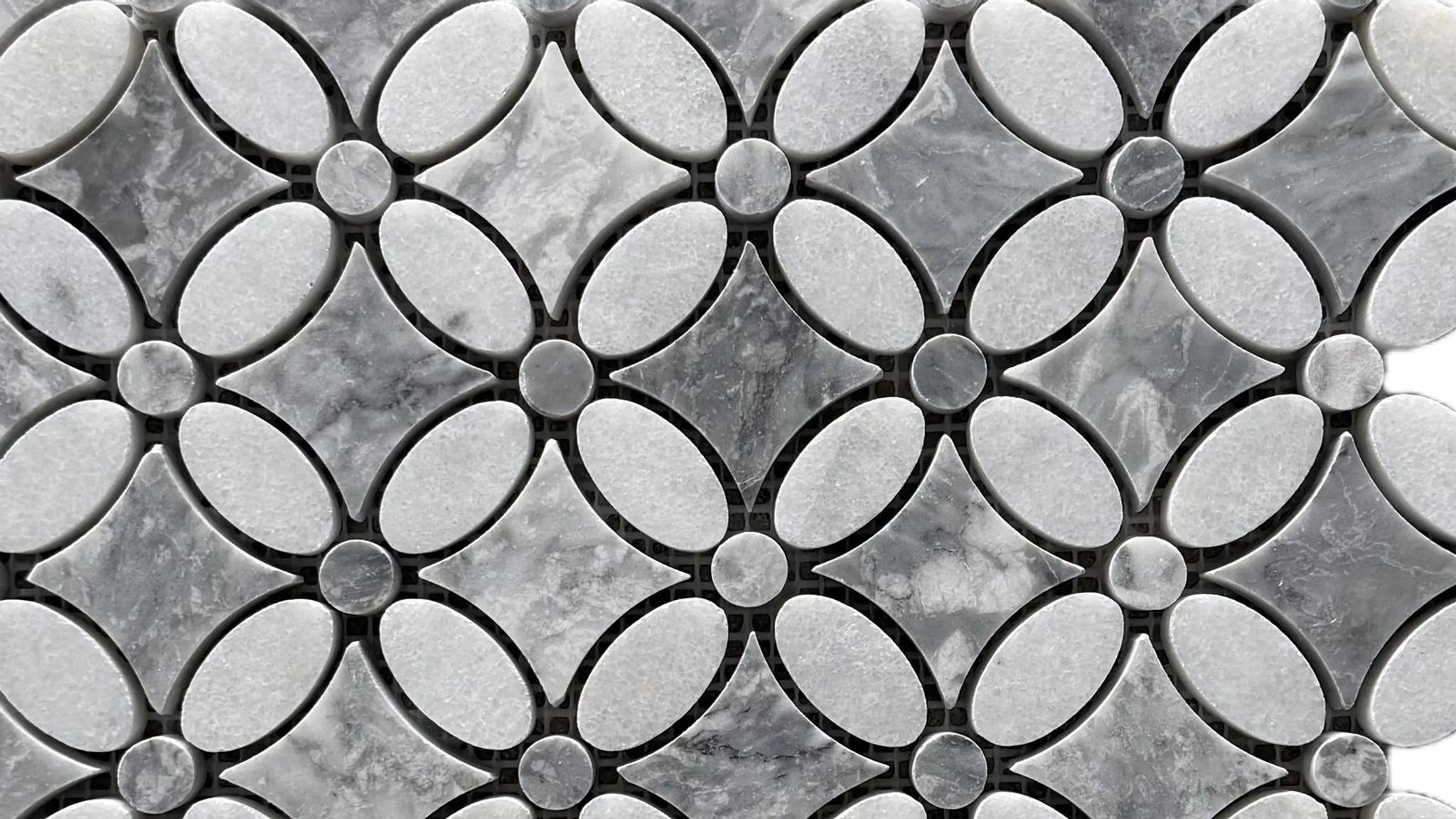
What should you use for everyday cleaning?
Travertine, marble and limestone are calcium carbonate stones, so the rule is the same for all three: clean gently, and never with acid.
- Use a pH-neutral cleaner made for natural stone, a stone soap, or a little mild dish soap in warm water. Too much cleaner leaves a film, so follow the dilution on the label.
- Rinse with clean water and dry with a soft cloth. Change the rinse water often.
- Dust-mop floors often with a clean, dry mop. Sand and grit are abrasive and wear the surface, especially on polished stone.
- Put mats inside and outside entrances, with slip-resistant backs.
- Blot spills with a paper towel straight away instead of wiping them, which spreads them. Then rinse with water and a little mild soap, and dry.
What should you never use on travertine, marble or limestone?
| Product | What it does |
|---|---|
| Vinegar, lemon juice and other acids | Etches the surface, leaving dull patches, even when diluted |
| Acidic bathroom, limescale, tub and grout cleaners | Etch the stone around the area being cleaned |
| Rust removers and toilet cleaners that contain hydrofluoric acid | Attack every kind of stone, granite included |
| Scouring powders and abrasive creams | Scratch the surface |
| Bleach mixed with ammonia | Gives off a toxic gas. Never mix them |
Etching is damage to the surface, not dirt, so it cannot be cleaned off. Sealing does not prevent it; see our guide to sealing.
How do you clean a travertine or marble shower?
- Run a squeegee over the walls and floor after each shower. It is the simplest way to keep soap scum and hard-water marks from building up. Good ventilation helps against mould.
- Soap scum: use a non-acidic soap scum remover, or about 1/2 cup of ammonia in a gallon of water (about 30 ml per litre). Do not use the ammonia solution often, because frequent use can dull some stones.
- Mould and mildew: clean with a dilute solution of bleach, ammonia or hydrogen peroxide, about 1/2 cup per gallon of water, then rinse well. Use one product at a time.
- Hard-water spots: the Natural Stone Institute suggests buffing them with dry 0000 steel wool. Try it on a hidden area first. Do not use limescale removers, which are acidic.
Laying a marble mosaic shower floor? See our guide to installing marble mosaic for the finish and grout to choose.
Still planning the shower? See travertine, marble and limestone in showers for finishes, slope and waterproofing.
How do you clean the grout between stone tiles?
Scrub the joints with a soft nylon brush and a pH-neutral or alkaline cleaner whose maker says it is safe on natural stone, then rinse. Never use an acidic grout cleaner: it will etch the stone along the edge of every joint. For mould in the grout, use the dilute solution described for showers above.
How do you remove a stain from travertine or marble?
First, work out what caused it. The colour and the shape usually tell you, and the treatment depends on the cause. These are the Natural Stone Institute's recommendations.
| Stain | What it looks like | Treatment |
|---|---|---|
| Oil (cooking oil, grease, cosmetics) | A darker patch | Clean with a soft liquid cleanser, mineral spirits or acetone, then a poultice of baking soda and water, or of poultice powder and mineral spirits |
| Organic (coffee, tea, fruit, food, leaves) | A pinkish-brown mark | Indoors, 12% hydrogen peroxide with a few drops of ammonia, or a poultice made with it. Outdoors, sun and rain usually bleach it out once the source is gone |
| Rust and iron | Orange to brown, in the shape of the object | A poultice of diatomaceous earth and a rust remover. Deep rust may be permanent; ask a stone restorer |
| Copper and bronze | Green or muddy brown | A poultice of poultice powder and ammonia |
| Mould, algae, moss | Green, black or grey growth | About 1/2 cup of bleach, ammonia or hydrogen peroxide per gallon of water |
| Ink and marker | Lines or spots | On light stone, bleach or hydrogen peroxide. On dark stone, lacquer thinner or acetone |
| Water spots and rings | Dull spots of hard-water residue | Buff with dry 0000 steel wool |
Wear gloves and eye protection with these chemicals, test each one on a hidden area first, and never mix bleach with ammonia.
How do you make and use a poultice?
A poultice is a paste that draws a stain out of the stone. The Natural Stone Institute describes the method:
- Mix the chemical for the stain with a white absorbent powder, such as kaolin, diatomaceous earth, whiting or talc, into a paste about as thick as peanut butter.
- Wet the stained area with distilled water.
- Spread the paste 1/4 to 1/2 in (about 6 to 12 mm) thick, about 1 in (25 mm) beyond the stain, with a wood or plastic spatula.
- Cover it with plastic, tape the edges, and leave it for 24 to 48 hours.
- Remove it, rinse with distilled water and buff dry. Repeat if the stain is still there; some stains need several attempts, and some never come out completely.
Do not use whiting or fuller's earth with an acidic chemical: the reaction cancels the poultice.
Is it a stain or an etch mark?
A stain is something the stone has absorbed, so it is usually darker than the stone around it. An etch mark is where acid has eaten into the surface, so it looks dull, lighter or rough, and it is often the shape of a glass or a splash. A poultice cannot remove an etch mark.
- On polished marble, wet the surface, sprinkle on a marble polishing powder and buff it with a damp cloth or a low-speed buffing pad until the mark goes.
- On honed, tumbled or brushed stone, test on a hidden area first, so the repaired spot keeps the same finish as the rest.
- Ask a stone restorer for deep or widespread etching, which needs re-honing or re-polishing.
Honed stone hides etching better than polished stone. Our guide to stone finishes compares them.
How do you clean travertine pavers and pool decks?
- Sweep often, and rinse with clean water. For heavier dirt, use a cleaner made for exterior natural stone.
- Algae and moss: flush with clear water, then use a mild bleach solution, and rinse well.
- Around pools, rinse the deck with fresh water regularly, especially around salt-water pools.
- If you use a pressure washer, keep the pressure low, use a wide fan tip rather than a turbo or rotary nozzle, keep the nozzle well back from the surface, and do not aim into the joints. High pressure can roughen the face, wash out the joint sand and strip the sealer. Re-sand any joints it opens.
- White powder on the surface is efflorescence: salts carried up by water as it dries out. Brush or vacuum it off dry and repeat as the stone dries. Washing it only brings it back. If it keeps returning, find and fix the source of the moisture. Do not use an acidic efflorescence remover on travertine.
Let the paving dry before you reseal it. Our guide to sealing explains how to tell when it needs it.
Still planning the deck? See our guide to installing travertine pavers.
Stone for your project
We produce travertine, marble and limestone tiles, mosaics and pavers at our factory in Denizli, Türkiye, for wholesale and project orders. Tell us the stone, finish and where it will be used, and we will quote for your specification. See our products for examples of past production.
Frequently asked questions
- Can you use vinegar on travertine?
- No. Vinegar is an acid, and acids etch travertine, marble and limestone, leaving dull patches even when diluted. Use a pH-neutral stone cleaner or a little mild dish soap in warm water.
- Can you use bleach on travertine?
- Diluted, against mould, mildew, algae or moss: about 1/2 cup of bleach per gallon of water (about 30 ml per litre), then rinse well. Test it on a hidden area first, do not use it for everyday cleaning, and never mix it with ammonia.
- What is the best cleaner for travertine floors?
- A pH-neutral cleaner made for natural stone, or a stone soap, used at the dilution on the label. Dust-mop often, because grit wears the surface.
- How do you get mould out of a travertine shower?
- Scrub with a dilute solution of hydrogen peroxide, bleach or ammonia, about 1/2 cup per gallon of water, and rinse. Use one product at a time. Then squeegee after each shower and keep the room ventilated.
- Can you pressure wash travertine pavers?
- Yes, carefully: low pressure, a wide fan tip, the nozzle well back from the surface and away from the joints. High pressure can roughen the stone, wash out the joint sand and strip the sealer.
- How do you remove etching from marble?
- On polished marble, light etch marks can be buffed out with a marble polishing powder and a damp cloth. Deep or widespread etching, and etching on honed or tumbled stone, is a job for a stone restorer.