
Can you use travertine, marble and limestone in a shower?
The short version
Yes, when the shower is built for it: a waterproofing membrane behind and under the stone, a floor that falls at least 1/4 in per foot (2%) to the drain, a honed, tumbled or brushed finish on the floor, filled travertine, and a penetrating sealer. Polished stone suits walls but is slippery on a wet floor. Clean with pH-neutral products only.
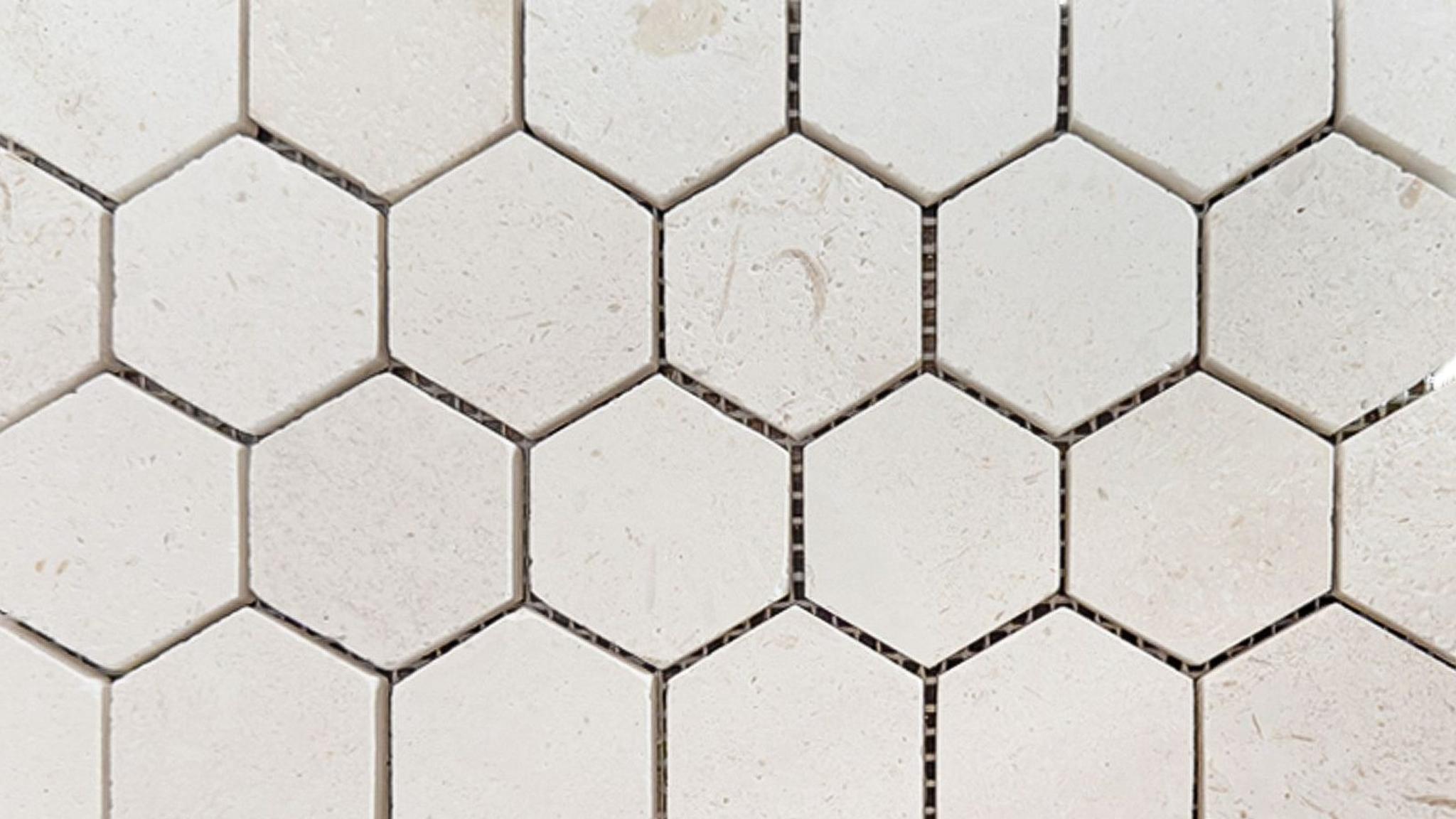
Is natural stone a good choice for a shower?
Yes. Travertine, marble and limestone have been used on shower walls and floors for a long time. What decides whether a stone shower lasts is mostly the build-up behind the stone, the finish on the floor and the cleaning products used on it.
The stone is not the waterproofing. Stone and grout both let some water through, so the shower needs a waterproofing membrane behind and under the stone, and a floor that falls to the drain. With those in place, the stone only has to look good and give grip.
What are the pros and cons of a natural stone shower?
| Pros | Cons |
|---|---|
| Every piece is different, so the walls and floor look natural rather than printed | Absorbs water and needs a penetrating sealer, renewed over time |
| Honed, tumbled and brushed finishes give grip underfoot | Acidic cleaners and limescale removers etch the surface |
| Small formats and mosaics follow the fall of the floor to the drain | Needs more care than porcelain, starting with a squeegee after each shower |
| The surface can be cleaned back, re-honed and re-sealed | Some stones, such as many green marbles, react to moisture and need special adhesives |
Walls or floor: what changes?
- Walls: almost any finish works, including polished, and larger formats are easy to use. The main risks are etching and hard-water marks, so plan the cleaning.
- Floor: use a finish with grip, such as honed, tumbled or brushed. Small formats and mosaics suit most shower floors, because the extra joints add grip and the small pieces follow the fall to the drain.
- Large tiles on the floor are easier with a linear drain, so the floor can fall in one direction instead of towards a central drain.
- Shelves, niches, benches and curbs: give every flat surface a slight fall so water runs off instead of standing.
Which finish should you choose for a shower?
| Finish | Walls | Floor |
|---|---|---|
| Polished | Yes; shows etching and water marks most | No: slippery when wet |
| Honed | Yes; hides etching better than polished | Yes, ideally in a small format or mosaic |
| Tumbled | Yes | Yes; a textured face with good grip |
| Brushed | Yes | Yes; a textured face with good grip |
Our guide to stone finishes explains how each one is made and how it ages.
Is natural stone slippery on a shower floor?
Polished stone is: tile makers advise against polished surfaces wherever water stands. Honed, tumbled and brushed stone give more grip, and the joints of a mosaic add more. No floor is slip proof, so specifiers use measured benchmarks:
- In the US, the benchmark under ANSI A326.3 for level interior floors walked on when wet is a wet DCOF of 0.42 or more.
- In the UK, the HSE classes a pendulum test value (PTV) of 36 or more as low slip potential, 25 to 35 as moderate and 24 or less as high. Barefoot areas are tested with a softer rubber slider (Slider 55).
Grip depends heavily on the finish, so see the chosen finish on a sample, wet, and follow the slip rules that apply to your project.
Filled or unfilled travertine in a shower?
Filled. Open holes collect water, soap and dirt, which is the last thing a shower needs. Our guide to filled and unfilled travertine explains the difference.
How should a stone shower be built?
Most failures in stone showers come from water that cannot get away, not from the stone itself. Donato Pompo, a forensic tile and stone consultant, lists the common causes: too little slope, blocked weep holes and gaps in the waterproofing.
- Waterproofing: a continuous membrane behind the walls and under the floor, including the curb, niches and bench. In North America, bonded membranes under tile and stone are made to ANSI A118.10.
- Slope: at least 1/4 in per foot (2%, or 6 mm per 305 mm) to the drain, at the surface of the membrane as well as the stone. The Uniform Plumbing Code sets 1/2 in per foot as the maximum.
- Drain: keep the weep holes in the drain open, so water that reaches the membrane can escape.
- Flashing: turn the membrane up the walls above the level of the threshold, as the membrane maker and local code require, and seal every seam and pipe penetration.
- Adhesive: use a white adhesive under light or translucent marble, so grey does not show through.
- Moisture-sensitive stone: many green marbles are serpentinite, which can warp, curl or stain when it meets the water in ordinary cement adhesives, most of all in large, thin tiles. Adhesive makers recommend epoxy-based fixing for these. A quick check is to leave a piece on a damp towel overnight and look for marks or warping.
If water sits in the mortar bed, the floor stays damp. The stone can look permanently wet, stain, or lose its surface as salts crystallise in it. That is a fault in the build-up, and sealing the face does not fix it.
For laying mosaic sheets on the floor, see our guide to installing marble mosaic.
Can you use natural stone in a steam shower?
Yes, but a steam shower is harder on the whole build-up than an ordinary shower, because the walls and ceiling stay hot and wet. The waterproofing system has to be rated by its maker for steam rooms, and its details decide the build-up. The stone and finish choices are the same as for a shower.
Travertine, marble or limestone: which suits a shower best?
All three are calcium carbonate stones, so all three etch with acids and all three need sealing. The differences are in the details.
- Travertine: specify it filled, in a honed or tumbled finish, and seal it.
- Marble: polished on walls if you want shine, honed or tumbled on the floor. Light marble needs a white adhesive, and green marble may need an epoxy one.
- Limestone: limestones range from dense to open-textured. Choose a dense one for a shower floor, and see it on a sample.
How do you keep a stone shower looking new?
- Squeegee the walls and floor after each shower, and keep the room ventilated.
- Clean with pH-neutral products only. Acidic shower and limescale cleaners etch the stone.
Seal after the grout has cured, and reseal when water stops beading on the surface. See our guide to sealing.
For soap scum, mould and hard-water marks, see our guide to cleaning travertine, marble and limestone.
Stone for bathroom and shower projects
We produce marble, travertine and limestone tiles and mosaics in polished, honed, tumbled and brushed finishes at our factory in Denizli, Türkiye, for wholesale and project orders. Tell us the stone, format, finish and total area, and we will quote for your specification. See our mosaics for examples of past production.
Frequently asked questions
- Is travertine good for shower walls?
- Yes. Use filled travertine, seal it, and clean it with pH-neutral products. Any finish works on walls, including polished.
- Is travertine OK for a shower floor?
- Yes, filled and in a honed or tumbled finish, ideally as a mosaic or small format, on a waterproofed floor that falls to the drain. Seal it after the grout has cured.
- Is marble good for a shower?
- Yes, if you accept the care it needs. Use polished or honed marble on the walls and honed or tumbled marble on the floor, seal it, and never use acidic cleaners, which etch it.
- Is marble slippery in a shower?
- Polished marble is slippery when wet and should not be used on a shower floor. Honed or tumbled marble, especially as a mosaic with many joints, gives far more grip.
- Should marble shower walls be honed or polished?
- Either works. Polished shows the colour and veining most but also shows etching and water marks more. Honed hides them better and needs less attention.
- Can you use natural stone in a steam shower?
- Yes, on a waterproofing system that its maker rates for steam rooms, built to that maker's details. Choose and seal the stone as for an ordinary shower.
- Is limestone good for a shower?
- Dense limestones work well on shower walls and floors when sealed and cleaned with pH-neutral products. Open-textured limestones need more care, so see a sample first.
Sources
- Donato Pompo, Installing ceramic tile, glass tile and stone in interior wet areas, TileLetter, January 2014
- Crossville, Wet DCOF and safety considerations (ANSI A326.3)
- Health and Safety Executive, Assessing the slip resistance of flooring
- ARDEX, Technical Bulletin TB010: Fixing of moisture and thermally sensitive natural stone (2020)
- Natural Stone Institute, Care and cleaning of natural stone