How do you choose and install a marble mosaic backsplash?
The short version
Marble, travertine and limestone mosaics suit kitchen and bathroom backsplashes, even in a polished finish, because nobody walks on them. Fix them with a white thin-set, grout narrow joints with unsanded grout, use a flexible sealant rather than grout where the backsplash meets the worktop, and seal the stone and grout. Acidic splashes etch these stones and oil can stain them, so wipe splashes off, especially behind the hob.
Is a marble mosaic backsplash a good idea?
Yes, for most kitchens and bathrooms. A backsplash is one of the easiest places for marble: nobody walks on it, so the softness that makes marble scratch on floors hardly matters, and even polished marble works. The real risks are splashes. Acidic food and drink, such as lemon, vinegar, wine and tomato, etch marble, and oil can soak in and leave a dark patch.
Seal the stone and the grout, wipe splashes off rather than leaving them to dry, and clean with pH-neutral products. On those terms a stone backsplash lasts as long as the kitchen. The same applies to travertine and limestone mosaics, which are calcium carbonate stones too.
Marble, travertine or limestone?
| Stone | Look | Backsplash notes |
|---|---|---|
| Marble | Veined or plain, white, grey, black, beige, red or green; polished, honed or tumbled | The widest choice of colours and patterns; polished works on walls |
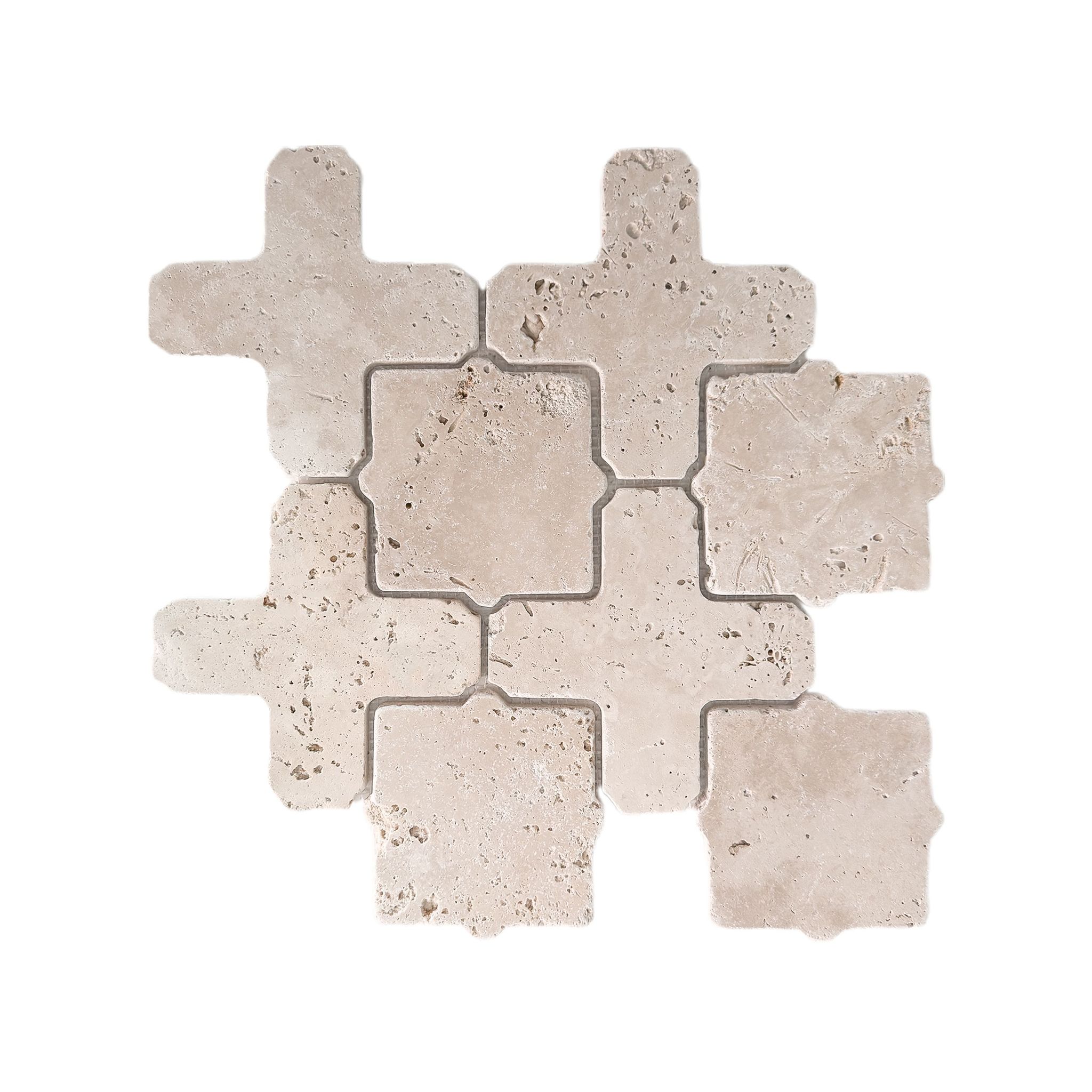
| Travertine | Warm beige, walnut, ivory and grey, with natural holes | Choose filled travertine, or seal well, so the holes do not catch grease |
| Limestone | Calm, even and matte, often in cream and beige | Usually more porous than marble, so sealing matters more |
| Mixed stones | Two stones in one pattern, such as limestone with marble | One cleaning and sealing plan covers both |
Which finish suits a backsplash?
- Polished: the most colour and depth, and easy to wipe. Etch marks from acidic splashes show most on it.
- Honed: smooth and matte, and hides etching far better than polished. The usual choice for a busy kitchen.
- Tumbled: soft edges and an aged look. Its textured face takes more wiping behind a hob, so seal it well.
Our guide to stone finishes compares the four finishes.
Which mosaic pattern should you choose?
Pattern decides both the look and the amount of grout. Small pieces mean more joints to keep clean, which matters most behind the hob.
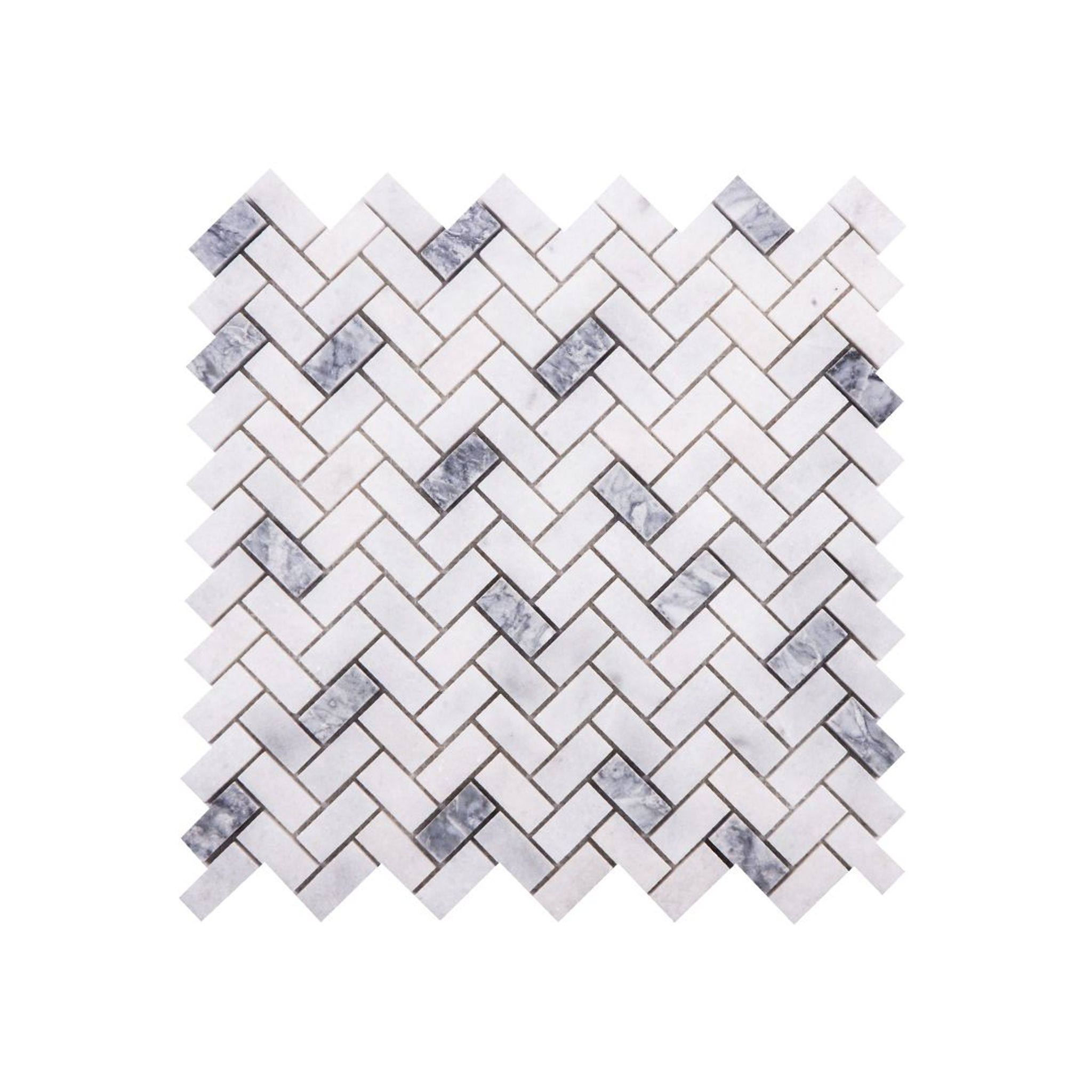
- Herringbone and chevron: movement and direction; works well behind a hob or as a feature panel.
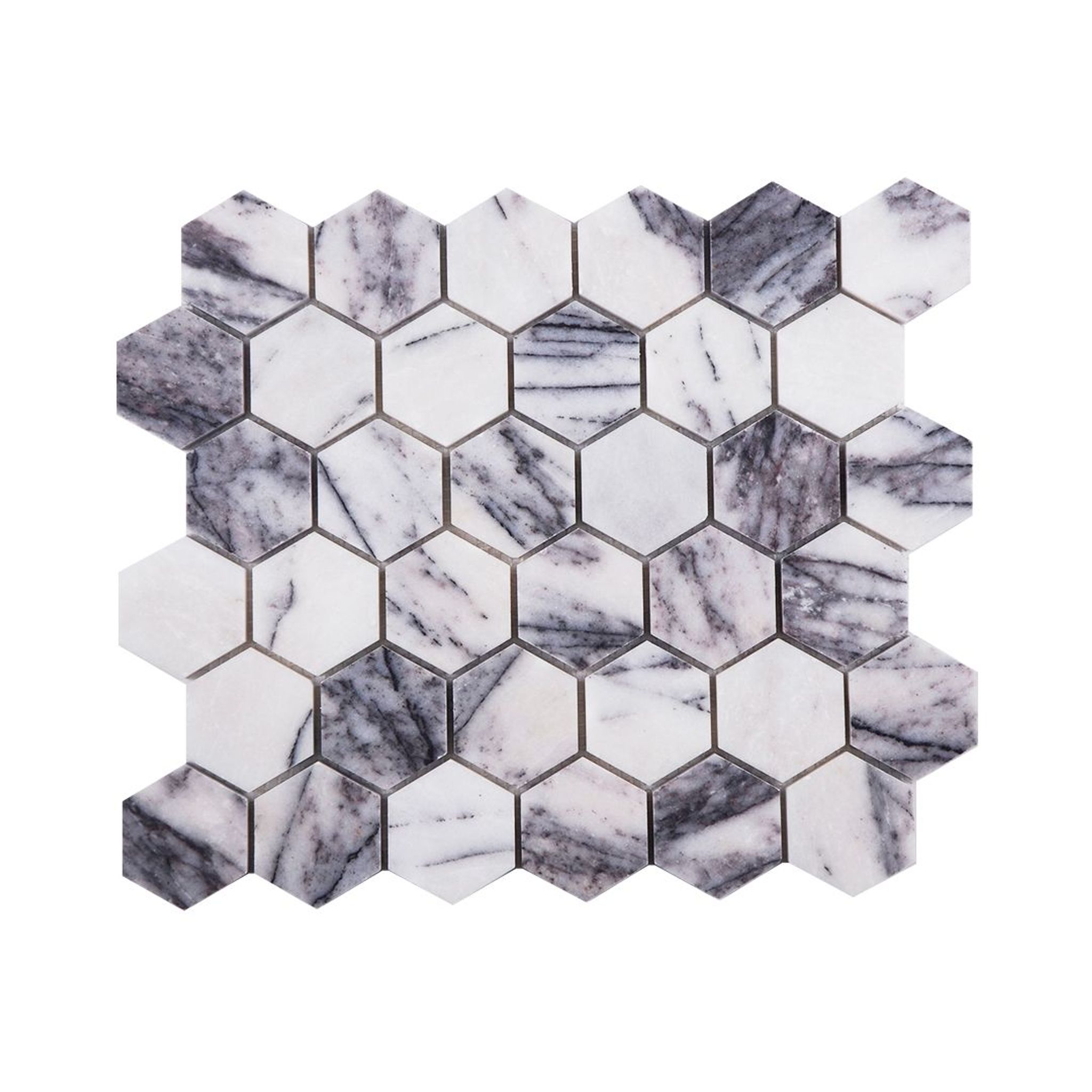
- Hexagon: a classic in every size; small hexagons read as texture, large ones as pattern.
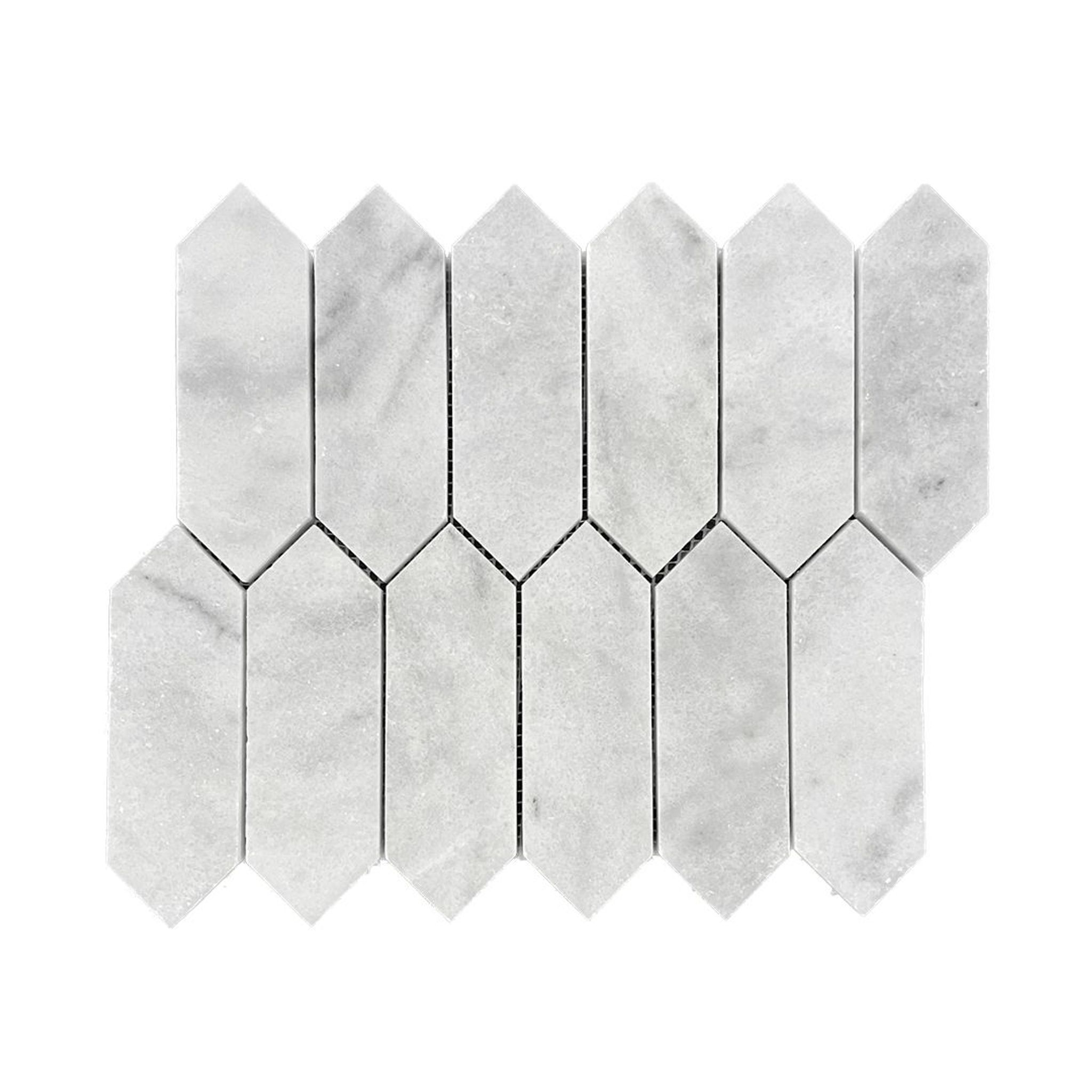
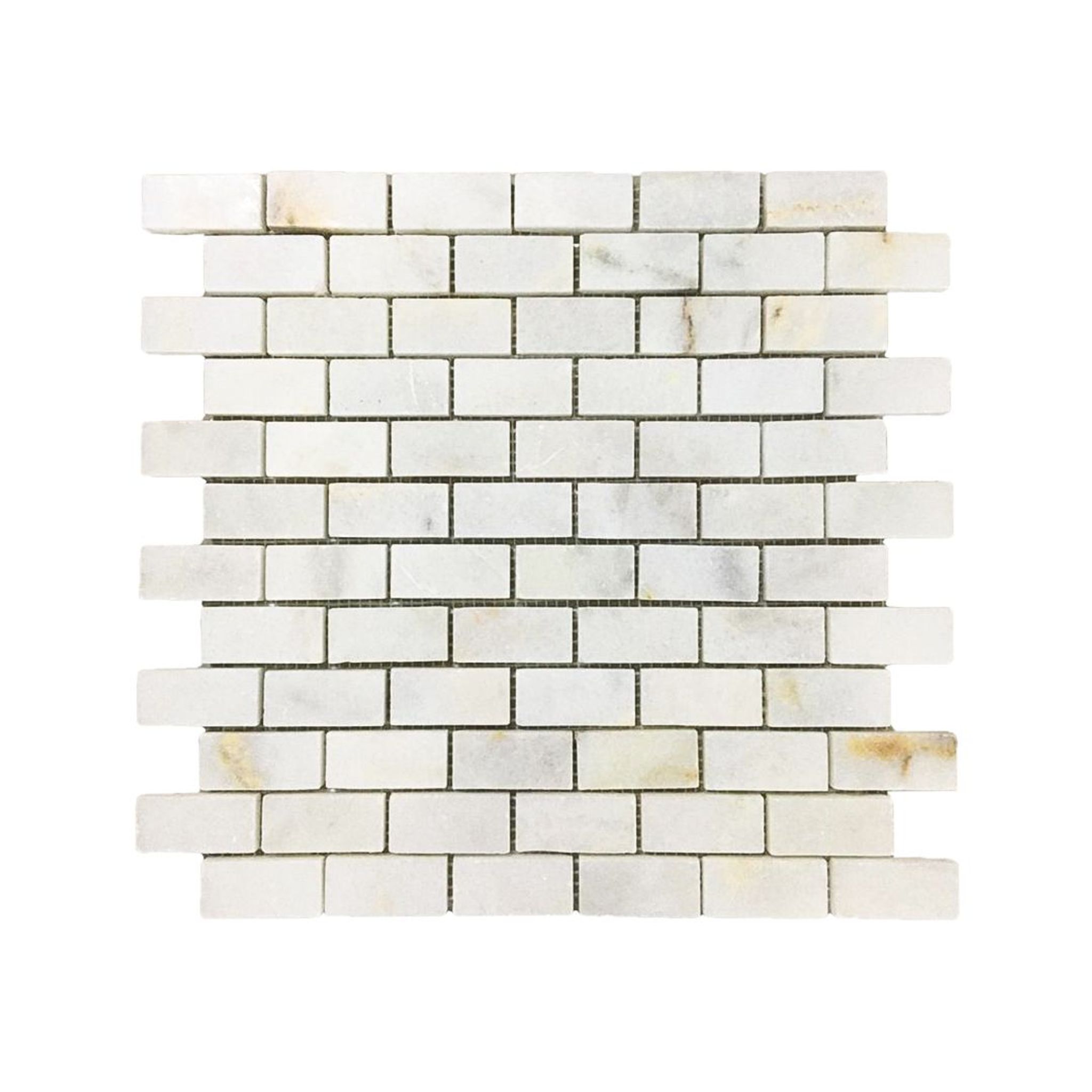
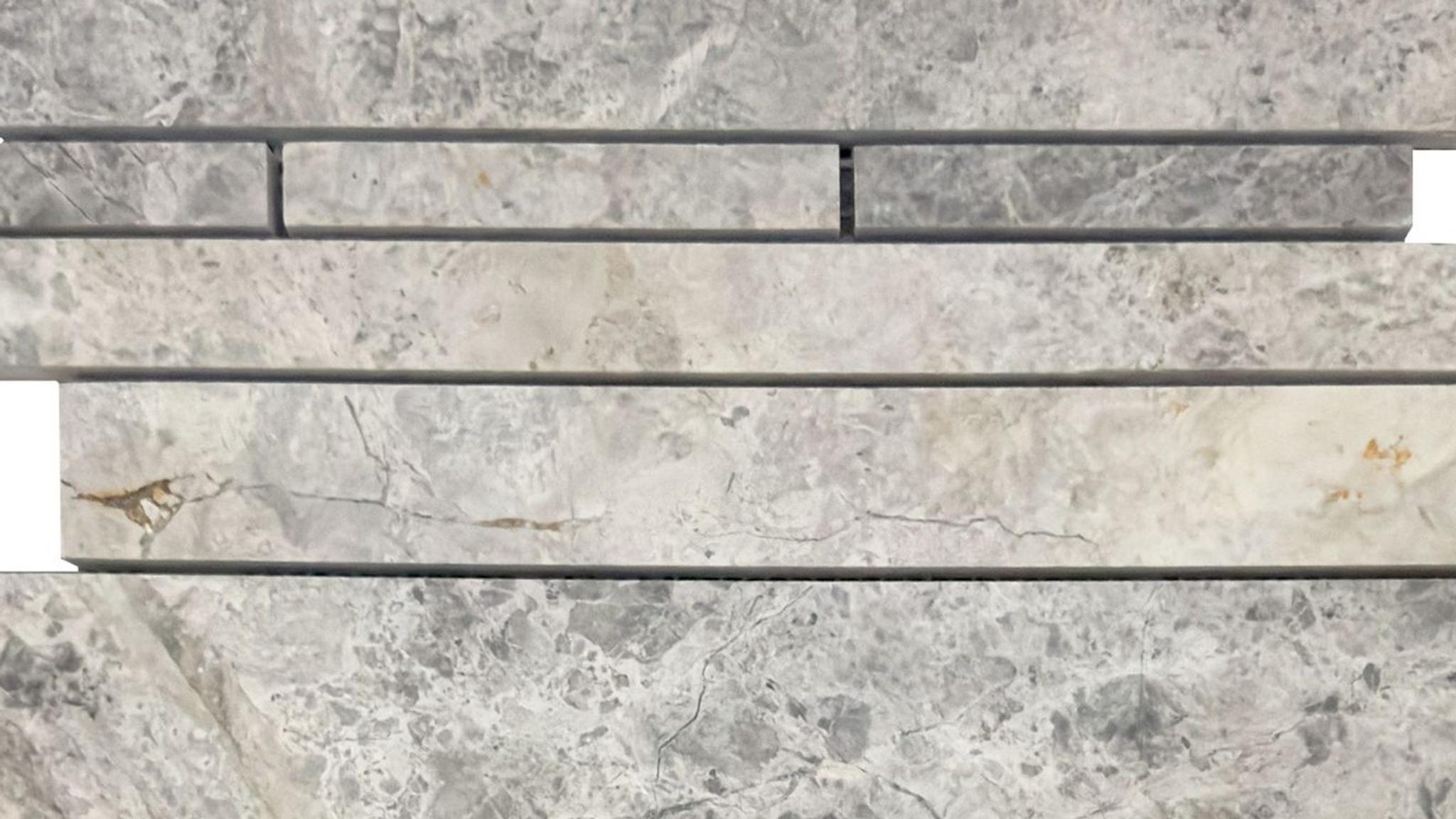
- Brick and picket: the calm, linear look of a subway tile in natural stone.
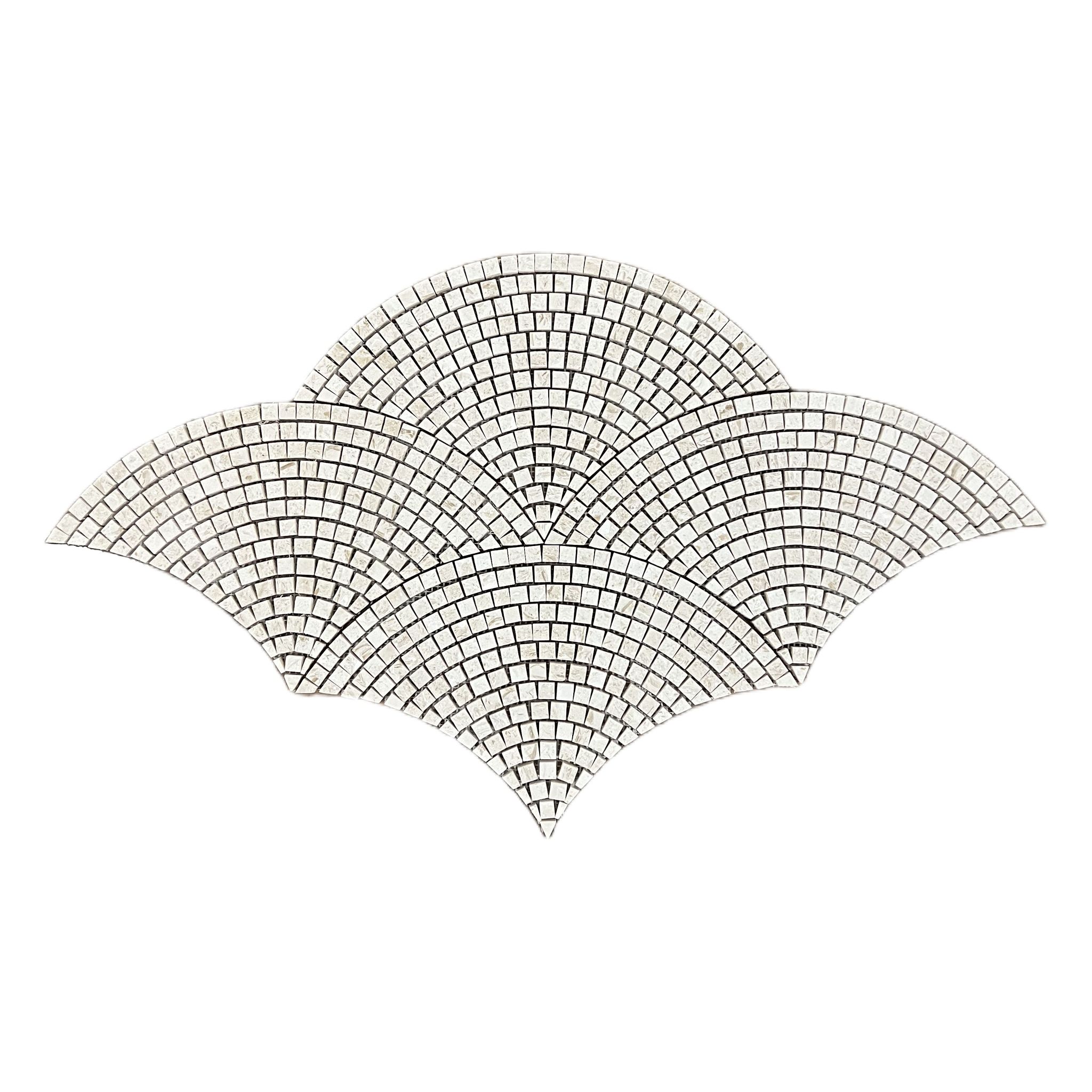
- Fan, scallop, flower and waterjet-cut patterns: a decorative panel; their curved edges need planning where the mosaic stops.
- Basket weave and mixed-stone patterns: contrast between two stones or two finishes.
For curved and custom patterns, see our guide to waterjet mosaic.
Browse past production by pattern: herringbone, hexagon and fan and scallop.
How high should a backsplash go?
- Under wall cabinets: from the worktop to the underside of the cabinets.
- Without wall cabinets: either a set height along the whole run, or the full wall up to the ceiling or a shelf.
- Behind the hob: often taken up to the hood, because that is where splashes reach.
Decide where the mosaic stops before you order: at a cabinet end, a wall corner, a window or a straight line across the wall. That choice decides how many cut pieces and edge details you need.
How do you finish the edges of a mosaic backsplash?
Mosaic sheets do not end in a clean line: patterns such as hexagon, herringbone and fan leave stepped or cut edges. The options are:
- End against something: a wall corner, the side of a cabinet or the underside of a shelf hides the edge.
- A trim profile: a metal or stone-coloured profile set into the adhesive gives a clean, protected edge.
- A stone border: a pencil, a listello or a narrow strip of matching or contrasting stone along the edge, made with the mosaic so stone and finish match.
- Cut pieces: on simple patterns, the outer row can be cut to a straight line and the edge sealed.
For the types of trim and how to order them, see our guide to pencil liners, listellos and borders.
Which adhesive and grout should you use?
- Adhesive: a white, polymer-modified thin-set made for natural stone. Grey adhesive can show through light or translucent marble.
- Grout: unsanded for joints of about 3 mm (1/8 in) or less, which covers most mosaics, and on polished or soft marble wherever the joints allow, because sanded grout can scratch the surface.
- Seal before grouting: usually yes for honed, tumbled and brushed stone, so the face does not take up grout pigment. Seal again once the grout has cured.
- Haze: remove it with water and a pH-neutral stone cleaner, never with an acid-based haze remover.
Our guide to installing marble mosaic covers setting the sheets step by step.
What goes where the backsplash meets the worktop?
Not grout. The joint between the backsplash and the worktop is a change of plane, and so are the inside corners of the wall. Walls and worktops move slightly, so a hard grout line there tends to crack. Industry guidance (TCNA Handbook, EJ171) calls for a movement joint at every change of plane, filled with a sealant to ASTM C920, usually silicone or polyurethane, over a foam backer rod or bond-breaker tape.
On marble, travertine and limestone, choose a sealant its maker says will not stain natural stone; ASTM C1248 is the staining test for sealants on porous stone. Match its colour to the grout so the joint disappears.
What about sockets and switches?
A mosaic adds the thickness of the stone and the adhesive to the wall, so sockets and switches can end up sitting too deep. Ask an electrician to fit box extenders or adjust the boxes so the plates sit flush, following the local electrical rules. Plan the layout so cuts around each box fall in the middle of a piece rather than leaving slivers.
Is marble mosaic a good idea behind a hob?
Yes, with planning. This is where oil and sauce splash most, so:
- Seal the stone and the grout before the kitchen is used, and reseal this area more often than the rest.
- Wipe grease and splashes off once the hob has cooled, with a pH-neutral cleaner; avoid acidic and abrasive cleaners, and use a degreaser only if its maker says it is safe on natural stone.
- Choose honed rather than polished if you want etch marks to show less.
- Consider a pattern with larger pieces, so there are fewer grout lines to clean.
Do you need to seal a marble backsplash?
Yes. Use a penetrating sealer made for natural stone, applied after the grout has cured, over the stone and the grout. Reseal when water drops start to darken the stone instead of beading on it. Sealing slows stains; it does not stop acid from etching.
See our guide to sealing for sealers and how often to reseal.
For oil stains, etch marks and a poultice, see our guide to cleaning.
How much mosaic do you need?
Measure the area wall by wall, then add an allowance for cuts that your installer agrees with: patterns with many cuts, such as herringbone and hexagon, need more than simple ones. Mosaic is sold by the sheet, and sheet sizes differ from pattern to pattern, so convert the area into whole sheets. Order everything from one production run, because natural stone varies from batch to batch.
Does the same apply to a bathroom backsplash?
Yes. Behind a basin or vanity the splashes are water, soap and cosmetics rather than food, so etching is less of a risk, but hard-water marks show on polished stone. Seal, use pH-neutral cleaners, and keep acidic limescale removers away. For walls that get soaked, see travertine, marble and limestone in showers.
Backsplash mosaics from our factory
We make marble, travertine and limestone mosaics at our factory in Denizli, Türkiye, mounted on mesh sheets, in herringbone, chevron, hexagon, brick, picket, fan, flower, basket weave, waterjet-cut and mixed-stone patterns, with matching stone borders, pencils and listellos, for wholesale and project orders. Tell us the pattern, stone, finish and total area, and we will quote for your specification, including your own combinations of stone and finish. See marble mosaic tile for examples of past production.
Still choosing the stone? See the pros and cons of marble tile.
Matching the worktop? See our guide to marble countertops.
Frequently asked questions
- Is a marble backsplash a bad idea?
- No. Because nobody walks on it, marble's softness matters little. The risks are acidic splashes, which etch it, and oil, which can stain it. Seal it, wipe splashes off and choose honed if you want etch marks to show less.
- Do you need to seal a marble mosaic backsplash?
- Yes. Seal honed and tumbled stone before grouting, then seal the stone and the grout once the grout has cured. Reseal when water starts to darken the stone, sooner behind the hob.
- Sanded or unsanded grout for a marble backsplash?
- Unsanded for joints of about 3 mm (1/8 in) or less, which covers most mosaics, and on polished marble wherever the joints allow, because sanded grout can scratch it.
- What adhesive should you use for a marble backsplash?
- A white, polymer-modified thin-set made for natural stone. Grey adhesive can show through light or translucent marble. Follow the adhesive maker for the trowel and mixing.
- Should you grout or caulk where the backsplash meets the worktop?
- Use a flexible sealant, not grout. It is a change of plane, where industry guidance calls for a movement joint with a silicone or polyurethane sealant. Choose one its maker says will not stain natural stone.
- Can you put marble mosaic behind a hob?
- Yes. Seal it well, reseal it more often than the rest, and wipe grease and splashes off with a pH-neutral cleaner once the hob has cooled. Larger pieces mean fewer grout lines to clean.