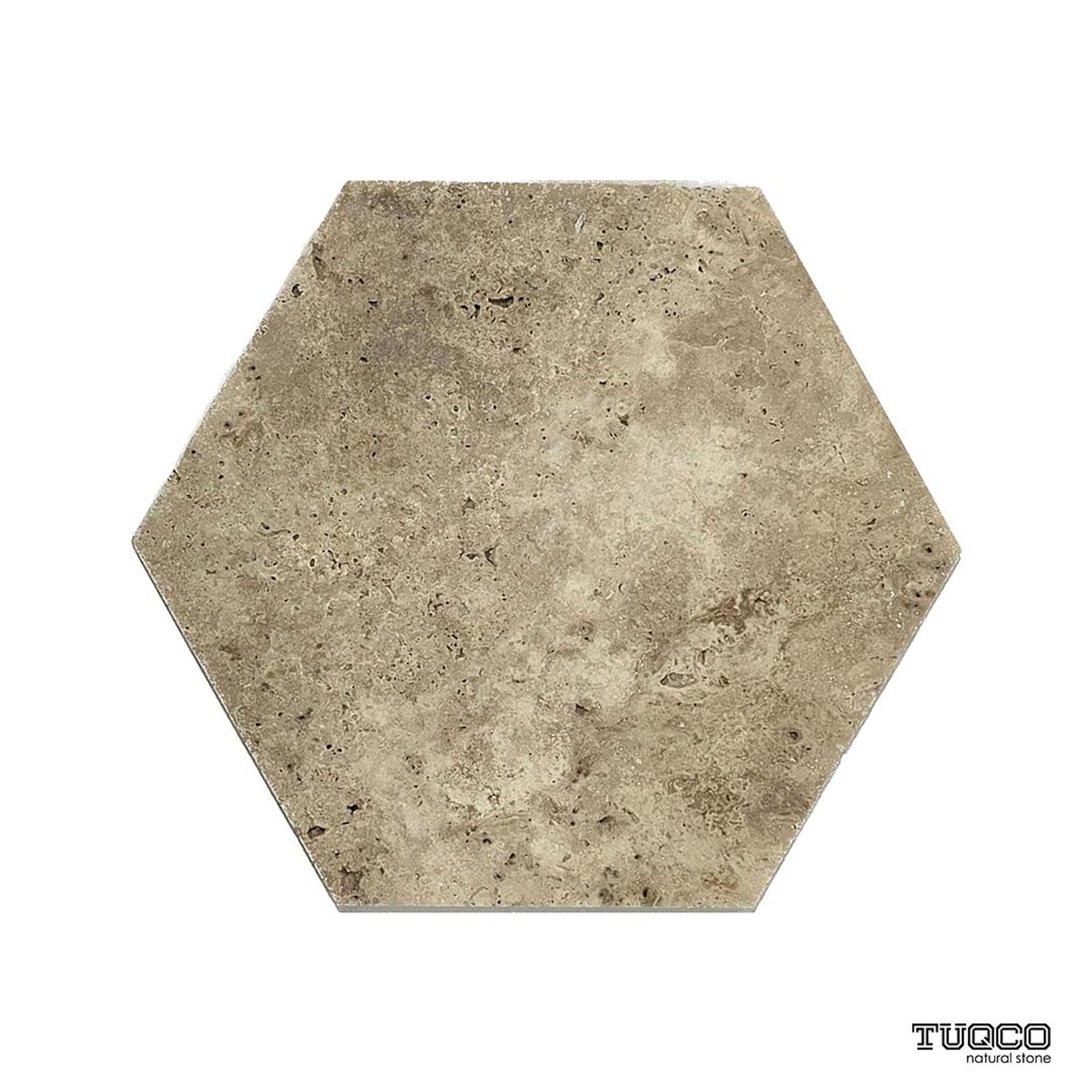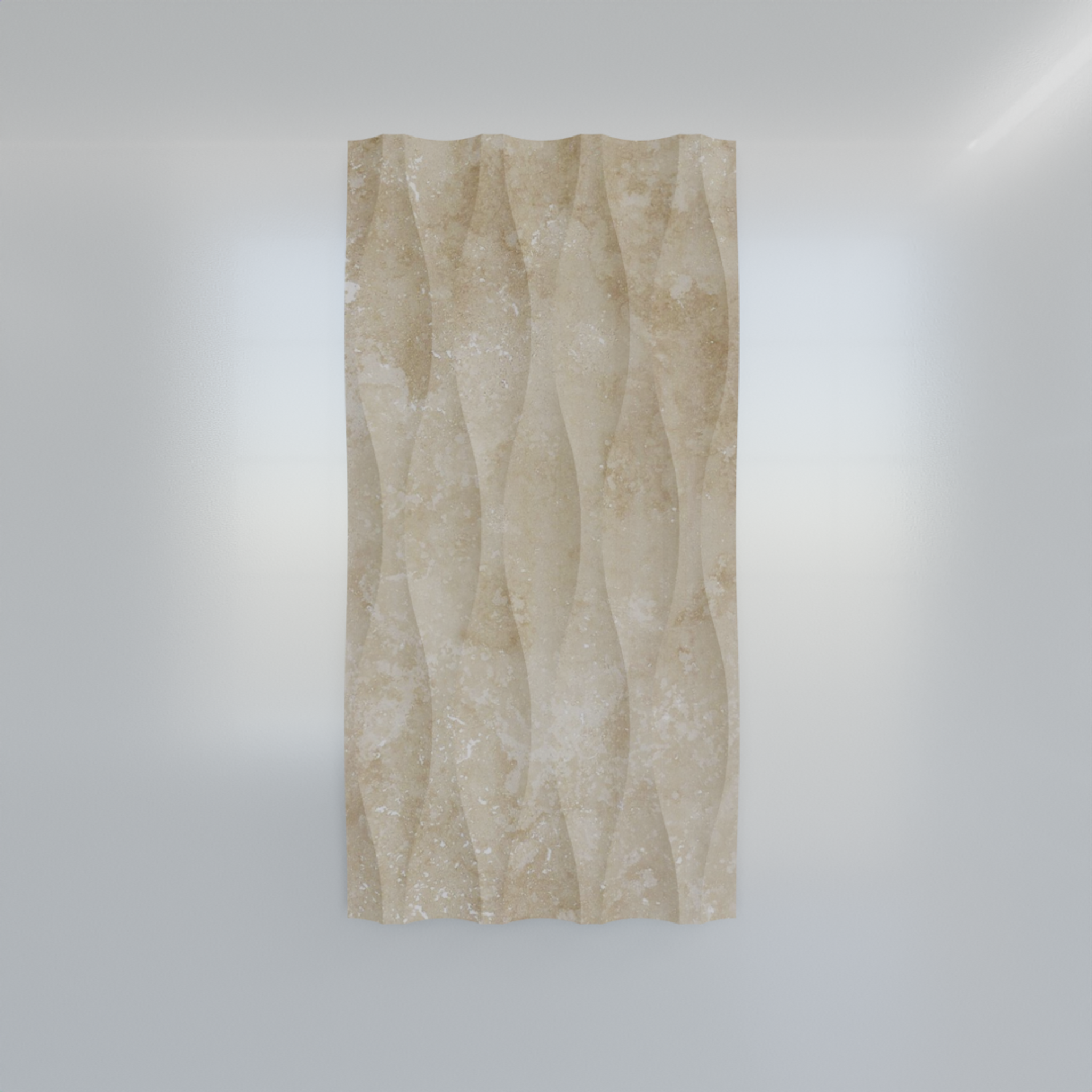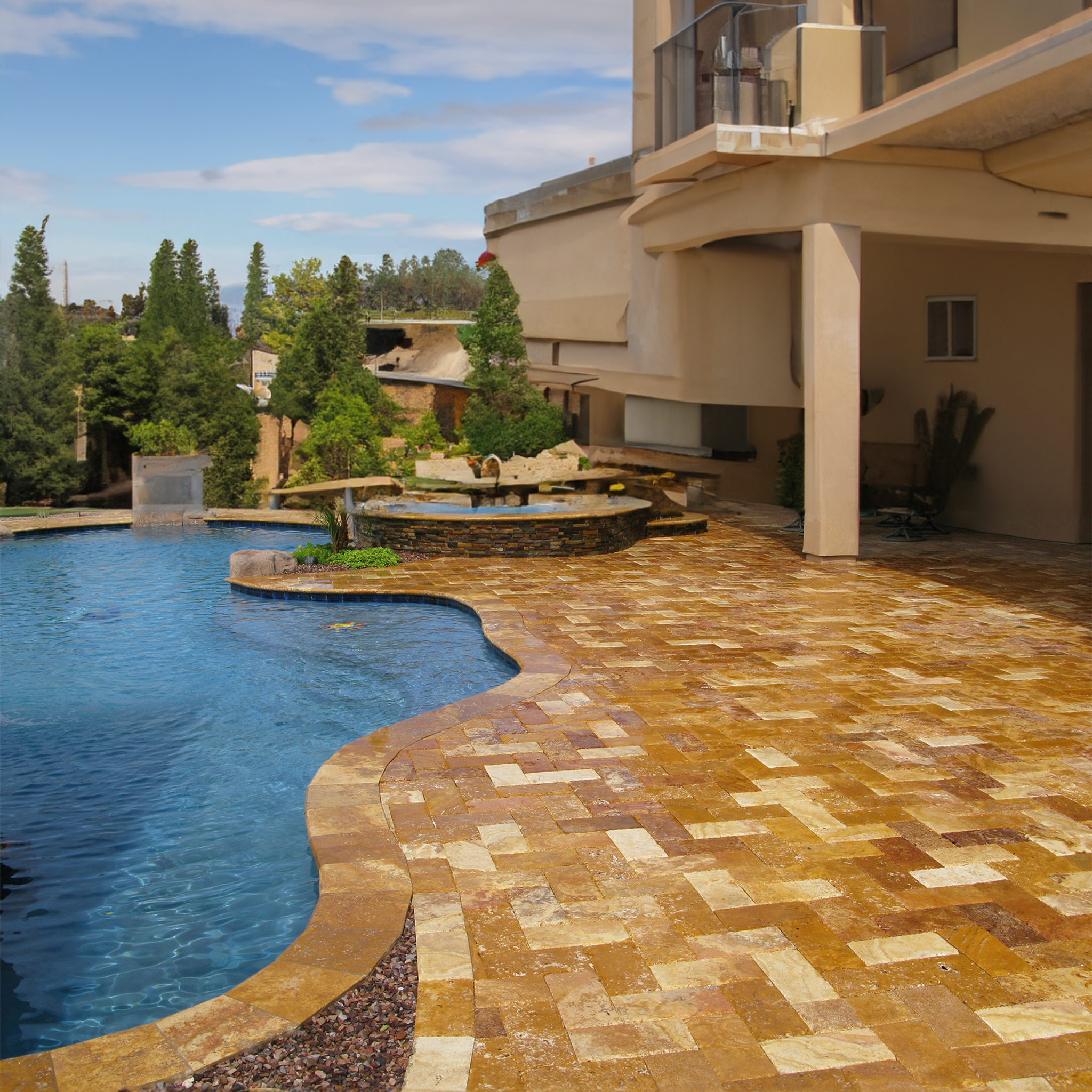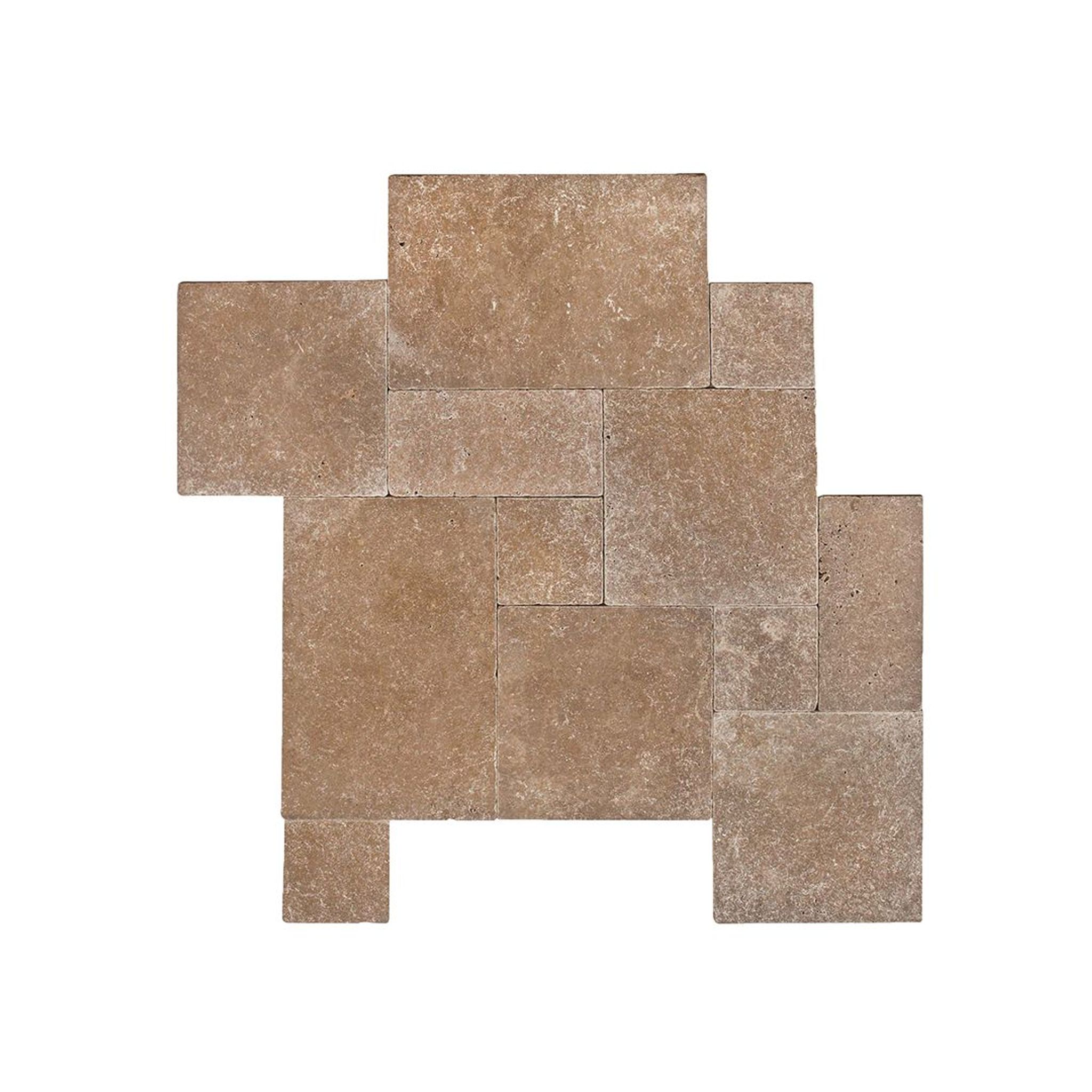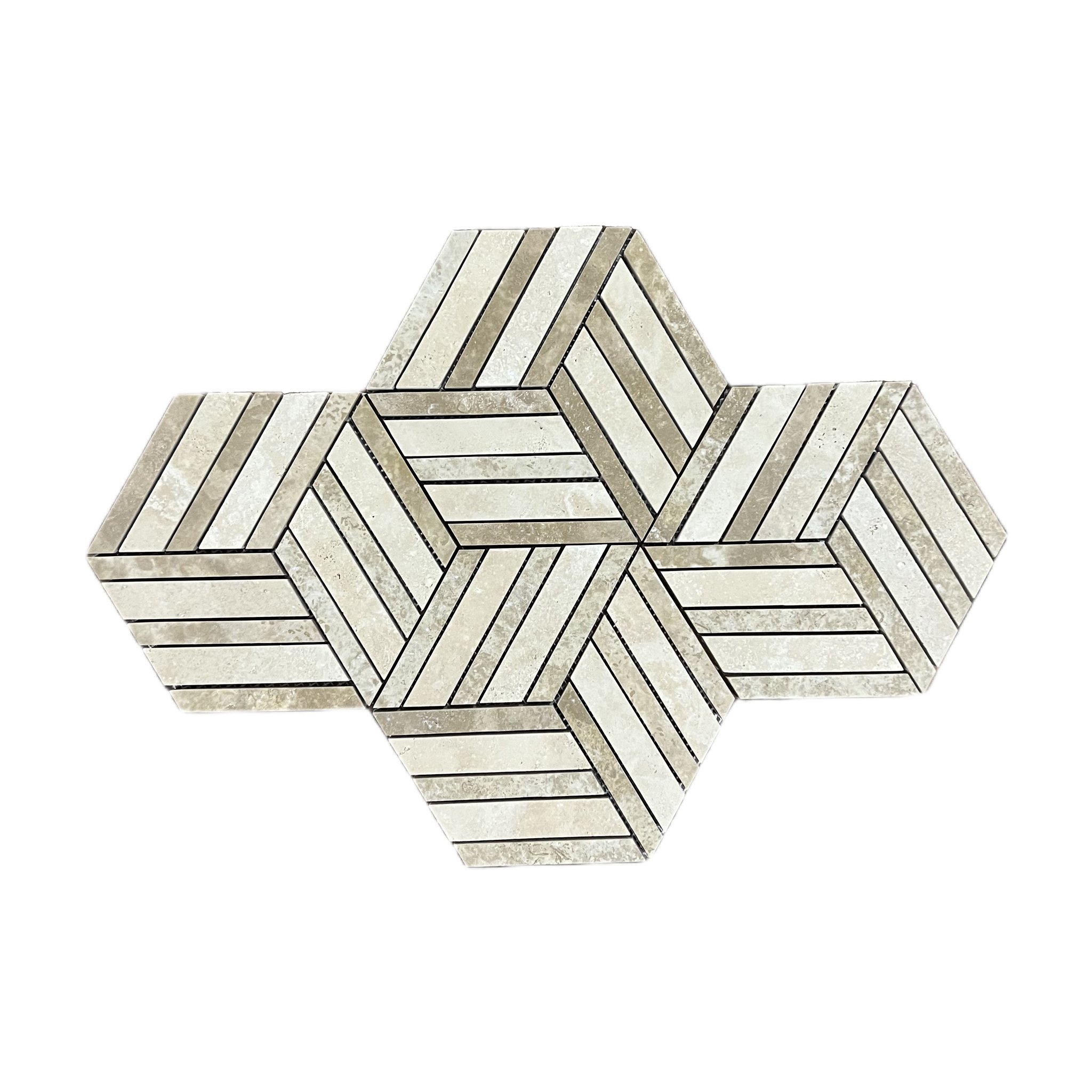

Split Hexagon Classic and Noche Travertine Honed Mosaic Tile
Travertine / Multi
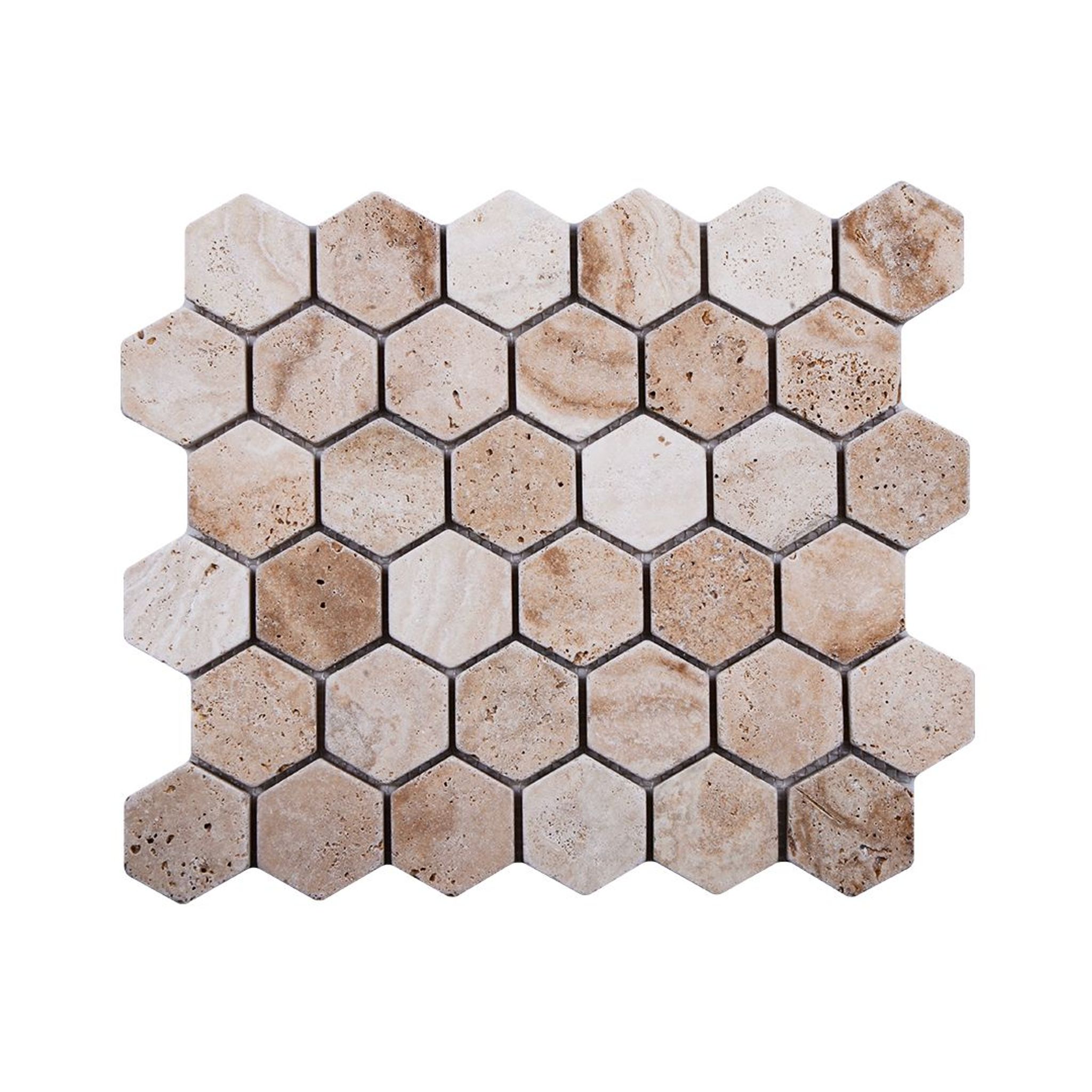
The same cubic trick in warmer stone: each hexagon is composed of alternating, precisely cut strips of soft, sandy Classic travertine and roasted-chestnut Noche, interlocking so the surface reads as a three-dimensional stack of cubes rather than a flat field. The contrast of pale and dark earthy tones sharpens the optical illusion. A honed finish gives a velvety, matte surface that diffuses light and celebrates the travertine's organic texture, keeping the geometry tactile and understated. With no fixed sheet size, the repeating illusion works at intimate detail or across statement runs. The matte, dense-jointed surface is slip-aware underfoot, suiting kitchen splashbacks, opulent wet-room floors and textural feature walls in a grand sunroom or entrance hall. Working from our own travertine, we fill, hone and calibrate each sheet so the split strips align cleanly across large runs, where any drift would collapse the cubic effect.
Technical Specifications
| Density | Typical 2,410–2,720 kg/m³ (EN 1936) |
|---|---|
| Water Absorption | Typical ~2.6% by weight (EN 13755) |
| Compressive Strength | Typical 50–87 MPa (EN 1926) |
Read Before You Specify
- Honed, polished, tumbled or brushed — which finish should you specify?Specify honed for interior floors, tumbled or brushed where the surface gets wet, and polished only where there is no slip requirement. All four start from the same slab; the finish changes grip, how visibly it wears, and how often it needs sealing — not the stone itself.
- Marble or travertine — which should you specify?Specify marble where a polished, low-absorption surface matters, and travertine where texture, grip and warmth matter more. Marble absorbs about 0.15% of its weight in water against travertine at roughly 2.6%, but the two overlap in compressive strength — porosity and strength are separate properties.
Related Products
Selected from the same material family and our newest arrivals.