
Are marble countertops a good idea? Pros, cons and what to specify
The short version
Marble countertops are cool, smooth and naturally veined, and can be re-honed instead of replaced, but acids etch them, knives and grit scratch them and they need sealing against stains. Choose honed or brushed marble for kitchens, any finish for vanity tops, a food-safe sealer, 3 cm for most kitchen worktops, and use boards, trivets and coasters.
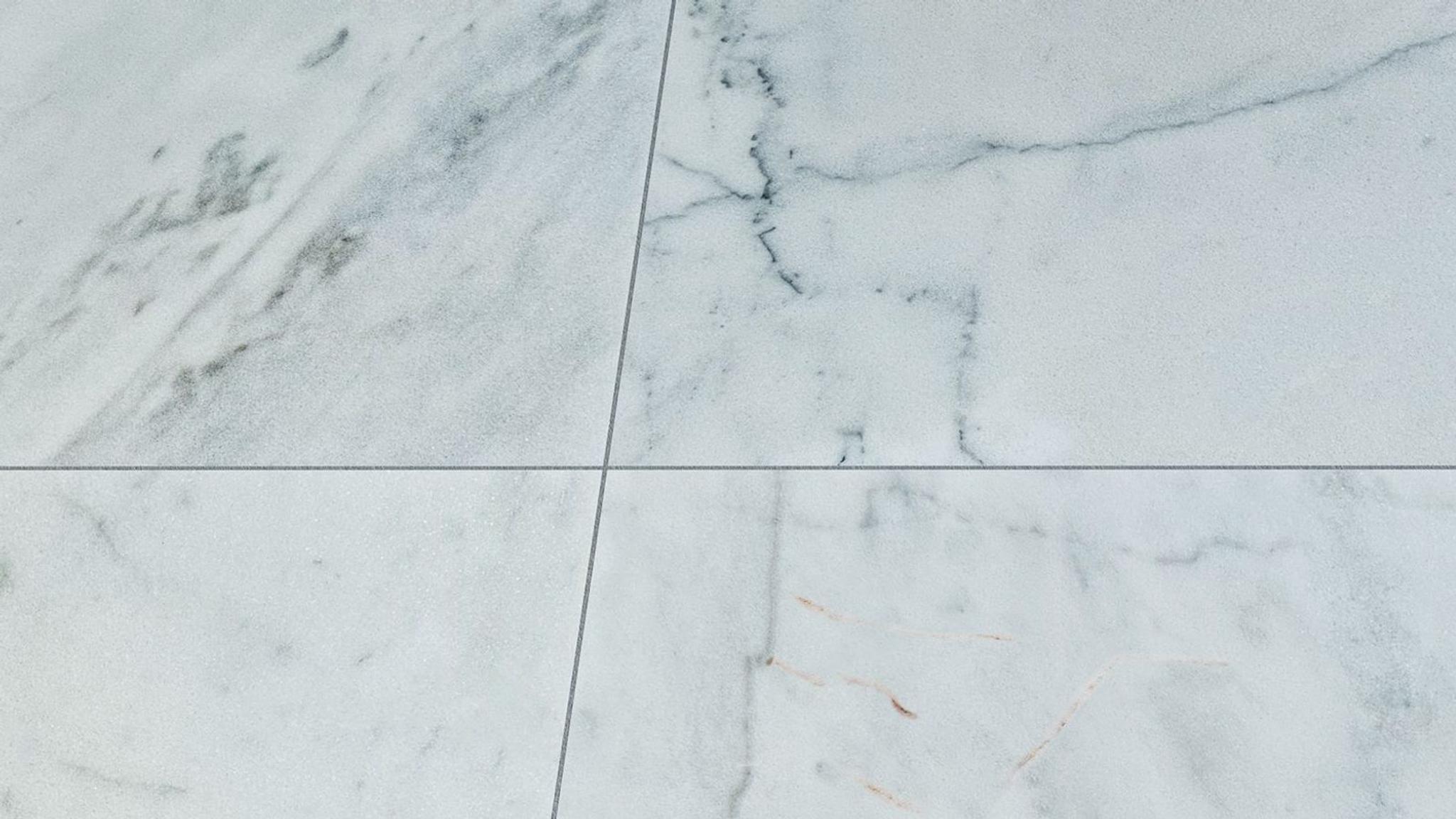
Are marble countertops a good idea?
Yes, if you choose them knowing what they will look like after years of use. Marble has been a worktop stone for a very long time, in kitchens, bakeries, bars and bathrooms. It is cool and smooth, it does not burn or rot, and its veining is different in every slab. What it will not do is stay perfect: acids etch it, and a kitchen marble counter gathers dull marks, small scratches and a softer sheen over time. Many owners like that patina. If you want a surface that looks new for ever, marble is the wrong choice.
Bathroom vanity tops, bar tops and hotel reception desks are easier places for marble than a busy family kitchen, because they meet fewer acids and less wear.
What are the pros and cons of marble countertops?
| Pros | Cons |
|---|---|
| Natural veining that runs through the slab; no two tops are the same | Acids such as lemon, vinegar, wine and tomato etch it, sealed or not |
| Cool and smooth, which is why pastry and chocolate makers like it | Soft: about 3 on the Mohs scale, so knives and grit scratch it |
| Polished, honed or brushed finishes from the same stone | Absorbs oil and coloured liquids if left, so it is sealed and spills are wiped up |
| Can be re-honed and re-polished in place instead of replaced | Needs trivets under hot pans, like most stone |
| Matching tiles, mosaics and backsplash in the same stone | Etch marks show most on a polished finish |
Where do marble countertops work best?
| Location | Verdict | What to specify |
|---|---|---|
| Bathroom vanity tops | Works very well | Any finish; sealed; acidic cleaners kept away |
| Hotel, bar and reception tops | Works well | Honed or brushed where glasses and drinks are set down; coasters |
| Kitchen islands and worktops | Works, with care | Honed or brushed if you cook a lot; sealed with a food-safe sealer |
| Baking and pastry areas | Works very well | Any finish; the cool surface is the point |
| Outdoor kitchens | Choose with care | Rain and sun weather marble; a textured finish and regular sealing |
Honed, polished or leathered marble for a kitchen?
- Polished: the deepest colour and veining, and the most closed surface, so it resists stains a little better. Every etch mark shows as a dull patch.
- Honed: matte and smooth. Etch marks blend into the surface far better, which is why many designers choose honed marble for kitchens. It is a little more open than polished, so seal it well.
- Brushed or leathered: a soft, textured face that hides etching and small scratches best.
For the four finishes side by side, see our guide to stone finishes.
Do marble countertops stain, etch or scratch?
- Etching: acids dissolve calcite and leave dull marks that look like stains but are damage to the surface. Sealing does not stop them. Light etching on polished marble can be buffed out; deeper etching needs re-honing.
- Stains: oil, wine, coffee and coloured spices can soak in if they sit. A sealer makes the stone stain resistant, not stain proof, so wipe spills up promptly.
- Scratches: a knife blade is harder than calcite. Always cut on a board, and lift rather than drag pots and ceramics.
For stains and etch marks, see our guide to cleaning.
Is there a harder marble that etches less?
Dolomitic marble, formed from dolostone rather than limestone, is slightly harder (about 3.5 to 4 on the Mohs scale against 3) and reacts far more slowly with acids than calcite marble. It still etches with longer contact, so it is more forgiving, not acid proof. Ask which kind a stone is when you choose it.
Can you put hot pans on marble?
Marble does not burn, but use trivets or mats under hot pans and dishes all the same, as the Natural Stone Institute advises for stone, and do not leave hot appliances standing on it. Use coasters under glasses too, especially with alcohol or citrus.
How do you seal a marble countertop?
Use a penetrating sealer made for natural stone and safe for food preparation areas. Apply it to clean, dry stone as the maker instructs and wipe off the excess. To check whether it needs doing again, leave a few drops of water on the surface: if they darken the stone instead of beading, reseal. Kitchen tops usually need it more often than vanity tops.
See our guide to sealing for sealers and how often to reseal.
How thick should a marble countertop be?
Stone countertops are usually 2 cm or 3 cm thick (about 3/4 in or 1 1/4 in).
- 3 cm: the usual choice for kitchen worktops and islands, long spans, overhangs and undermount sinks.
- 2 cm: lighter and lower in cost, common for vanity tops and wall-supported tops; on kitchens it is laid on a full support, and a thicker-looking edge can be made by mitring or laminating a strip under the front.
Overhangs and spans depend on the stone, the thickness and the support, so agree them with the fabricator and installer before the slab is cut.
Which edge profile suits marble?
- Eased: a square edge with the arris softened; clean and modern, and less prone to chipping than a sharp square edge.
- Bevel and half bullnose: a small angle or a rounded top edge; practical in kitchens.
- Full bullnose and ogee: fully rounded or decorative profiles, often on vanity and bar tops.
- Mitred: a deep, apron-style front, made by joining a strip to the top at 45 degrees.
Will a marble countertop have seams?
Often, yes. A slab has a limited size, so long runs and L-shaped worktops are made from more than one piece and joined with a colour-matched adhesive. Plan the seams with the fabricator: keep them away from the sink and hob, place them where the veining can be matched, and approve the layout of the slabs before cutting. For a feature island, book-matched slabs, cut in sequence so the veining mirrors across the seam, are an option.
Are Carrara and Calacatta marble good for kitchen countertops?
They are among the most popular. Both are white marbles, mostly calcite, so they etch like other calcite marbles; honed is the usual kitchen choice because etch marks hardly show on white honed stone. The names describe a look. Our Turkish Carrara and Turkish Calacatta marbles are Turkish stones named for that look, and our guide to Turkish and Italian marble explains what the names do and do not tell you.
Marble, granite or quartz?
| Feature | Marble | Granite | Engineered quartz |
|---|---|---|---|
| What it is | Natural stone, mostly calcite | Natural stone, mostly quartz and feldspar | Crushed quartz bound with resin |
| Look | Veining and depth | Speckled or flowing grain | Uniform; stone looks are printed or patterned |
| Acids | Etch it | Do not etch most granites | Do not etch it |
| Scratches | Scratches more easily | Much harder | Hard |
| Sealing | Yes | Usually | No |
| Repair | Can be re-honed and re-polished | Can be re-polished | Resin surface; limited refinishing |
One more point for buyers in Australia: since 1 July 2024, Australia has banned the manufacture, supply, processing and installation of engineered stone benchtops, panels and slabs, because of silicosis among workers who cut it.
Comparing marble with other natural stones? See limestone or marble and marble or travertine.
What about travertine and limestone countertops?
Both are used, mostly honed, and both etch with acids like marble. They are usually more porous, so they need more frequent sealing and quicker cleaning of spills. Travertine for a countertop should be filled, so the natural holes do not collect food and water. Both suit vanity tops and low-use areas better than a busy cooking kitchen.
How do you care for a marble countertop day to day?
- Wipe it with a pH-neutral stone cleaner or a little mild dish soap in warm water, then dry it.
- Never use vinegar, lemon, bathroom or limescale cleaners, or abrasive powders.
- Wipe up wine, juice, coffee and oil quickly.
- Use boards, trivets and coasters.
- Reseal when water drops start to darken the stone.
For the backsplash behind it, see our guide to mosaic backsplashes.
Marble countertops from our factory
We cut marble slabs and make countertops, vanity tops and bar tops at our factory in Denizli, Türkiye, for wholesale and project orders, together with matching tiles, mosaics and backsplashes in the same stone. Send us the drawings, the stone, the finish, the thickness and the edge profile, and we will quote for your specification. See marble from Turkey for the stones we work with.
Still choosing the stone? See the pros and cons of marble tile.
Frequently asked questions
- Are marble countertops a good idea in a kitchen?
- Yes, if you accept that they will etch and age. Choose honed or brushed marble, seal it with a food-safe sealer, wipe acidic spills quickly and use boards and trivets. If you want a surface that never marks, choose another material.
- Is honed or polished marble better for a kitchen countertop?
- Honed, for most kitchens. Etch marks blend into a honed surface, while on polished marble they show as dull patches. Polished resists stains slightly better, so it suits vanity tops and low-use areas.
- Can you put hot pans on marble?
- Use trivets or mats. Marble does not burn, but the Natural Stone Institute recommends trivets or mats under hot dishes on stone, and coasters under glasses.
- How often should you seal marble countertops?
- When water drops start to darken the stone instead of beading. Kitchen tops need it more often than vanity tops. Use a sealer that is safe for food preparation areas.
- How thick is a marble countertop?
- Usually 2 cm or 3 cm (about 3/4 in or 1 1/4 in). 3 cm is usual for kitchens, islands and undermount sinks; 2 cm suits vanity tops and fully supported tops.
- Is marble or quartz better for countertops?
- Quartz does not etch and needs no sealing. Marble is natural stone with real veining, can be refinished, and develops a patina. Choose quartz for minimum upkeep and marble for the look and feel of stone.