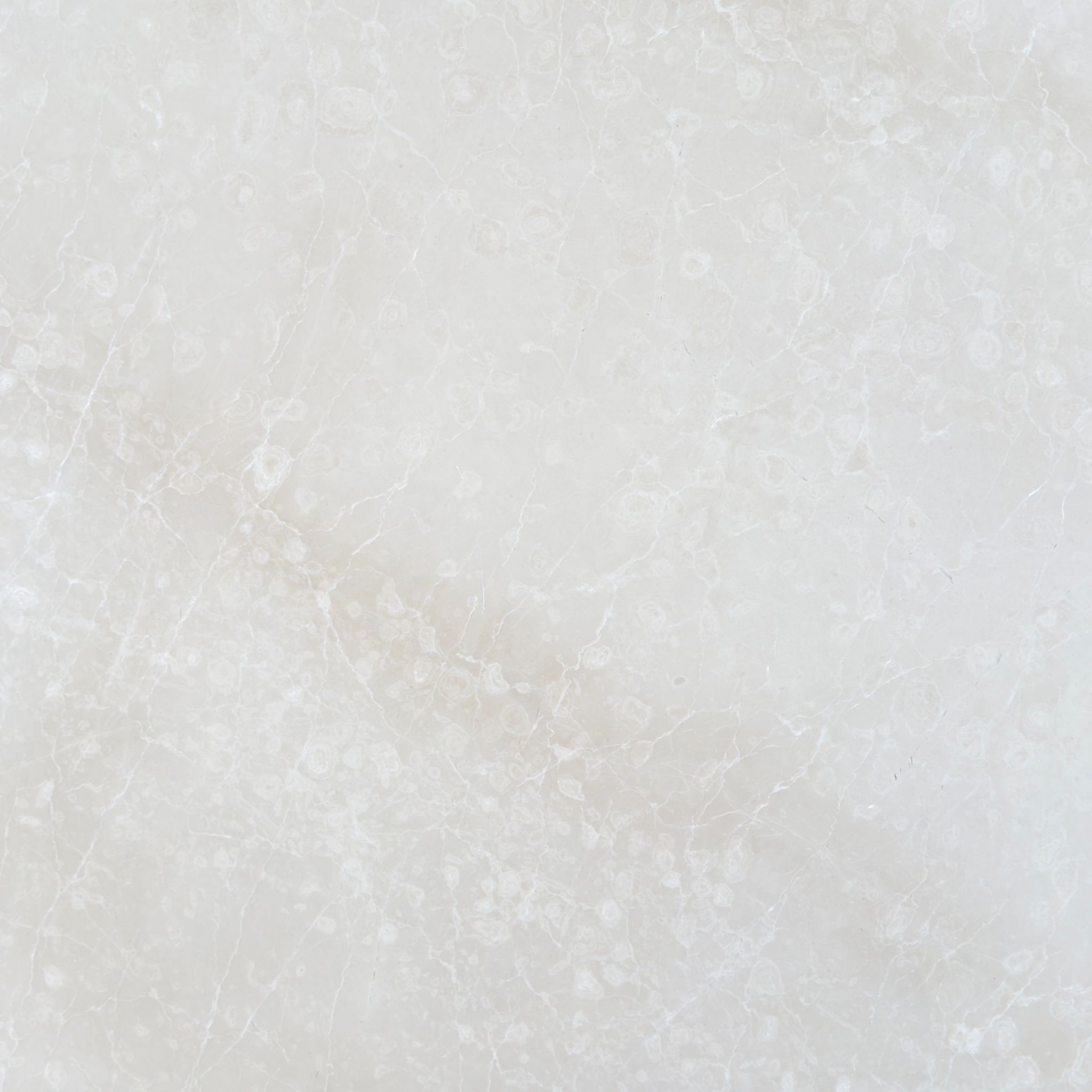
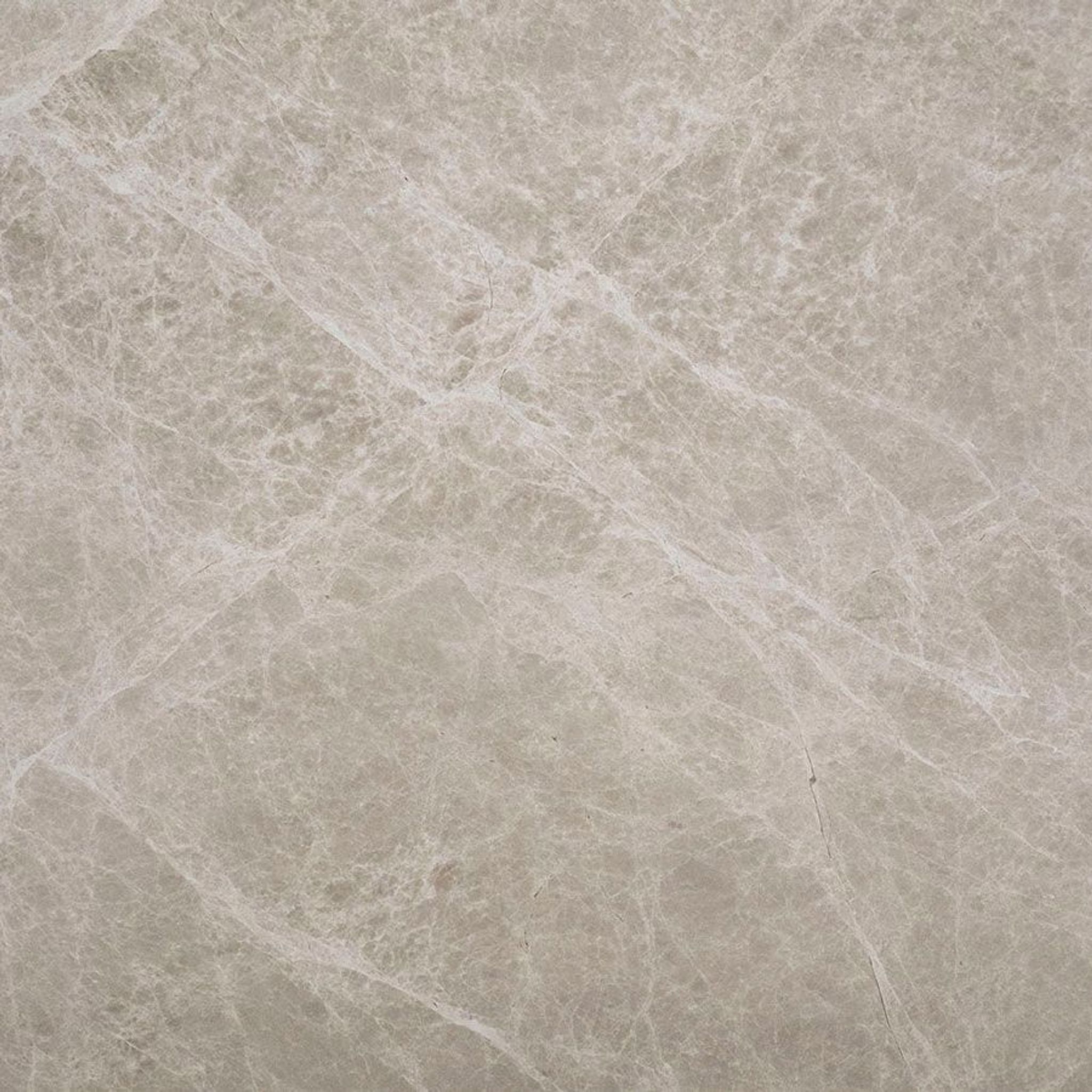
Turkish beige marble: Burdur Beige, Botticino, Emperador and other trade names
The short version
Turkish beige marble is sold under trade names, some Turkish such as Burdur Beige and some borrowed from Italian and Spanish stones such as Botticino, Crema and Emperador. A name describes a look, not a quarry. Many beige "marbles" are geologically dense limestones sold as commercial marble; they are polished, sealed and used like marble, and because tone varies from batch to batch, the approved sample matters more than the label.
What is Turkish beige marble?
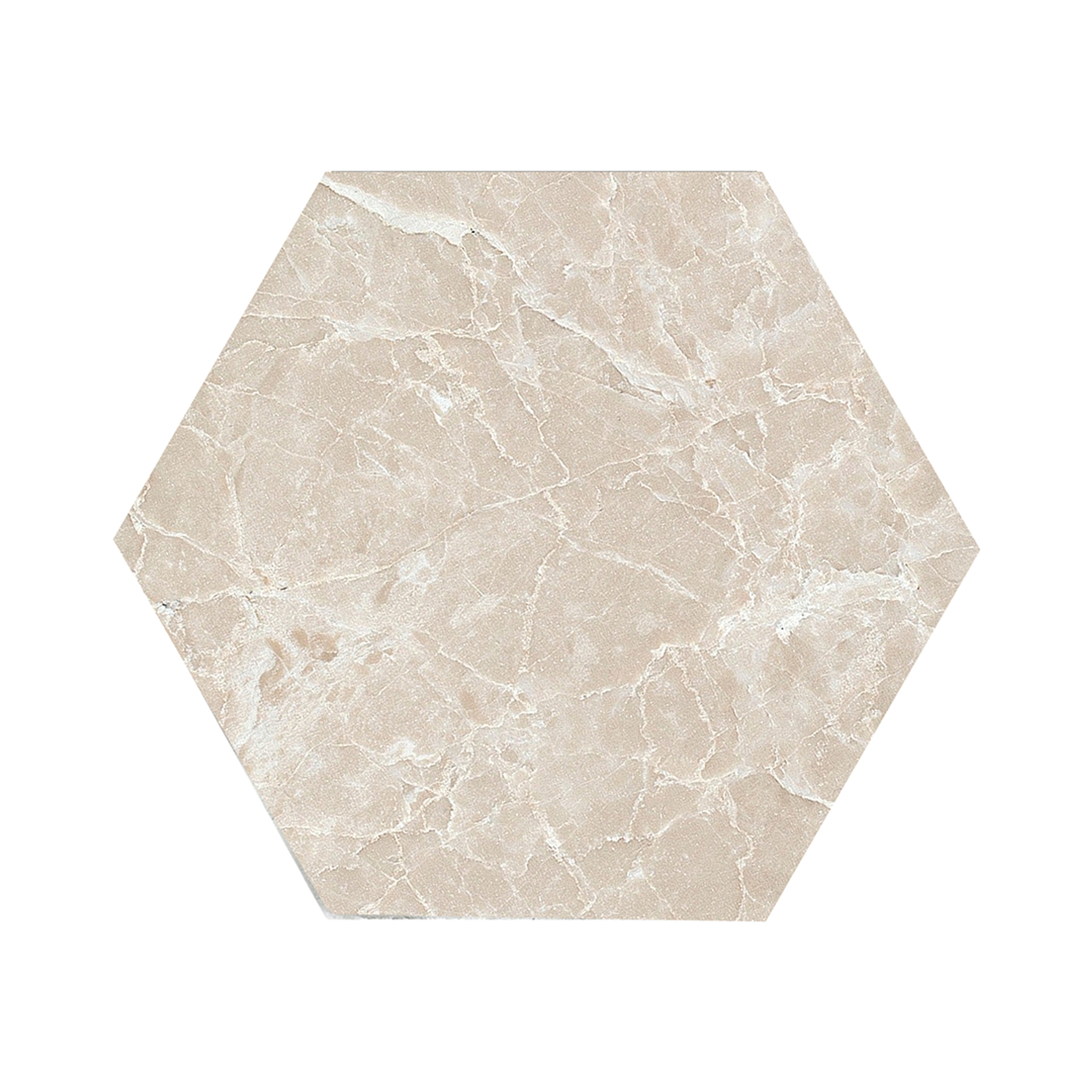
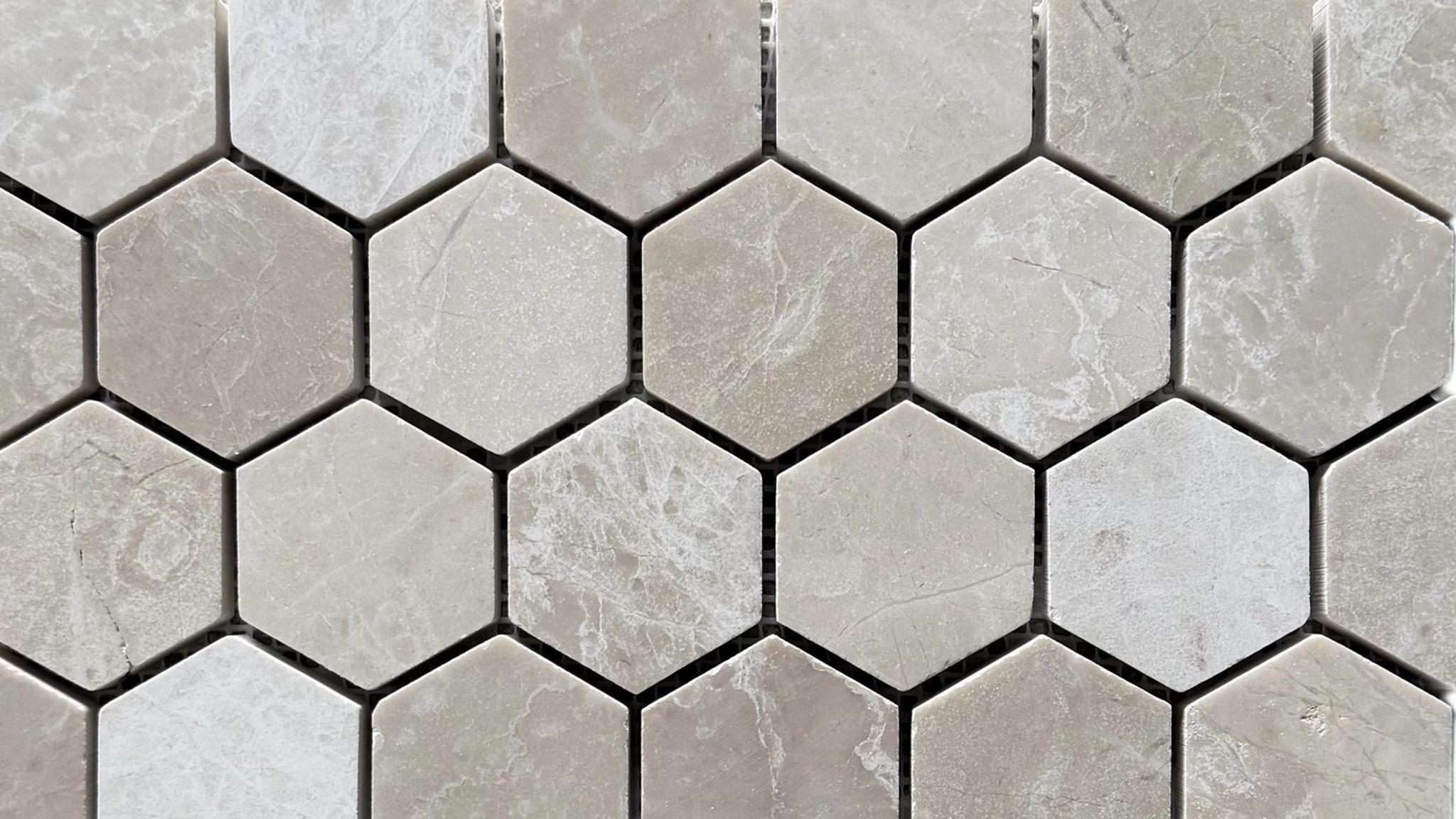
"Turkish beige marble" covers the cream, beige and light brown stones quarried in Turkey and sold for floors, walls and mosaics. They are usually sold under trade names, and some of those names are Turkish, such as Burdur Beige, while others are borrowed from Italian and Spanish stones, such as Botticino, Crema and Emperador.
A trade name describes a look, not a quarry. Two stones with the same name can come from different places, and the same stone can be sold under different names. This guide explains what the common names mean, what beige marble usually is geologically, and how to order a beige stone that matches.
Is beige marble really marble?
Often not, in the geological sense, and that is normal in the stone trade. Geologically, marble is limestone that heat and pressure have recrystallised. Commercially, "marble" means any stone that can be quarried in blocks, cut and polished, so many dense limestones are sold as marble.
Beige stones are a common example. A 2019 geology study of the marble quarries around Yarışlı Lake in Burdur, south-west Turkey, describes the cream-beige commercial marbles there as limestones. The Oxford University Museum of Natural History classes Italian Botticino as a limestone, and the Spanish Crema Marfil is described as an Eocene limestone.
In practice these stones are cut, polished and used like marble, and they behave like it: they are calcium carbonate, so acids etch them and they are sealed. What varies from stone to stone is how dense and how even it is, which is why the sample matters more than the label. For the difference between the two rock types, see limestone or marble.
What does "Burdur Beige" mean?
Burdur Beige is a Turkish trade name taken from Burdur, a province in south-west Turkey known for cream and beige stone. In the trade the name is used for a family of light beige stones with fine, light veining rather than for one quarry, and stones from different quarries are sold under it and under variants such as Burdur Cream.
Our own beige is described the same way: a Turkish beige marble in the Burdur Beige colour family. Beige stone varies from batch to batch, so we match the tone to the sample you approve rather than promise a single quarry.
Botticino, Crema Marfil and Emperador: where do the names come from?
| Name | Where the name comes from | Colour | What the original is |
|---|---|---|---|
| Burdur Beige | Burdur province, Turkey | Light beige to cream, fine light veins | Commercial marble; the cream-beige stones in a 2019 Burdur study are limestones |
| Botticino | Botticino, near Brescia, Italy | Ivory to beige, often with darker stylolite lines | Limestone (fossiliferous micrite) |
| Crema Marfil | Monte Coto, Alicante, Spain | Cream to ivory | Eocene limestone |
| Emperador (dark) | South-east Spain | Dark brown with lighter veins | Dolomitic limestone |
| Light Emperador | Named after the Spanish stone | Light brown, "coffee with milk", with white veins | Most light varieties come from Turkey |
The Italian and Spanish names are used worldwide for stones that look alike, wherever they are quarried. A Spanish trade magazine notes that most light Emperador on the market comes from Turkey.
Is our Botticino or Emperador Italian or Spanish?
No. Every stone we supply is Turkish. Our Botticino Fiorito and Light Emperador are Turkish marbles sold under those trade names, in the same way as our Turkish Carrara and Turkish Calacatta. For how marble names travel, and how to compare a Turkish and an Italian quote, see Turkish marble vs Italian marble.
Why does beige marble vary, and how do you order a match?
Beige stone is a sediment, and its tone, veining and small fossils change through the deposit, so two blocks of the same name rarely match exactly. A light beige can come out creamier, greyer or warmer from one batch to the next. To get a floor that reads as one stone:
- Approve a physical sample, ideally a few pieces that show the range, not a single photograph.
- Order the whole area, plus spare tiles for cuts and later repairs, in one order rather than in stages.
- Say how much variation is acceptable: some projects want a calm, even field; others want the movement of the stone.
- Lay out tiles from several boxes before fixing, so the variation spreads across the floor.
Where does beige marble tile work best?
- Floors in living areas, hallways and hotel lobbies: a honed finish is the usual choice, because it hides fine scratches and etch marks and is less slippery than polished.
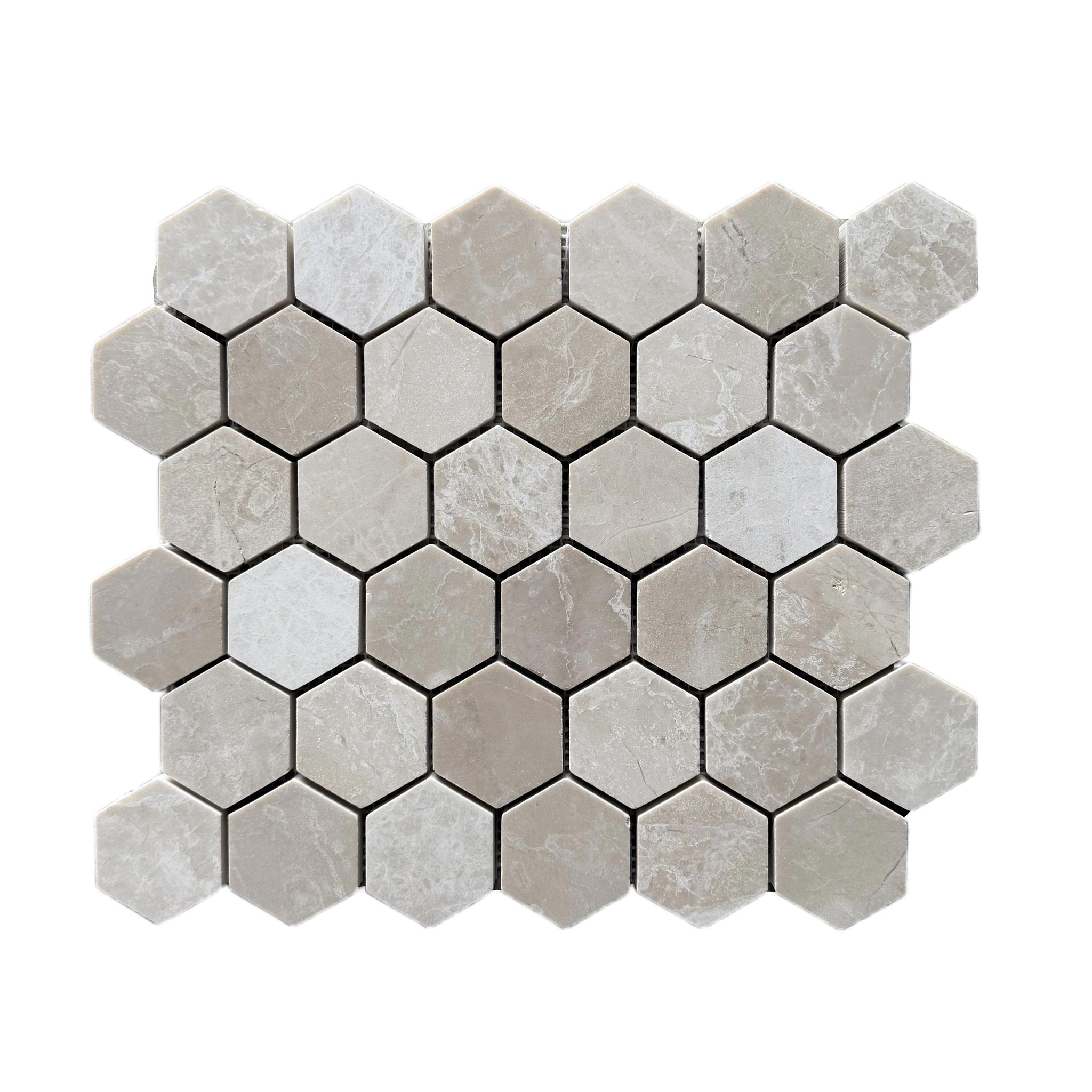
- Bathrooms: beige is a classic bathroom stone. On a shower floor use a honed or tumbled mosaic, not a polished tile.
- Kitchens: on floors, honed and sealed, with spills wiped up quickly; on backsplashes, any finish.
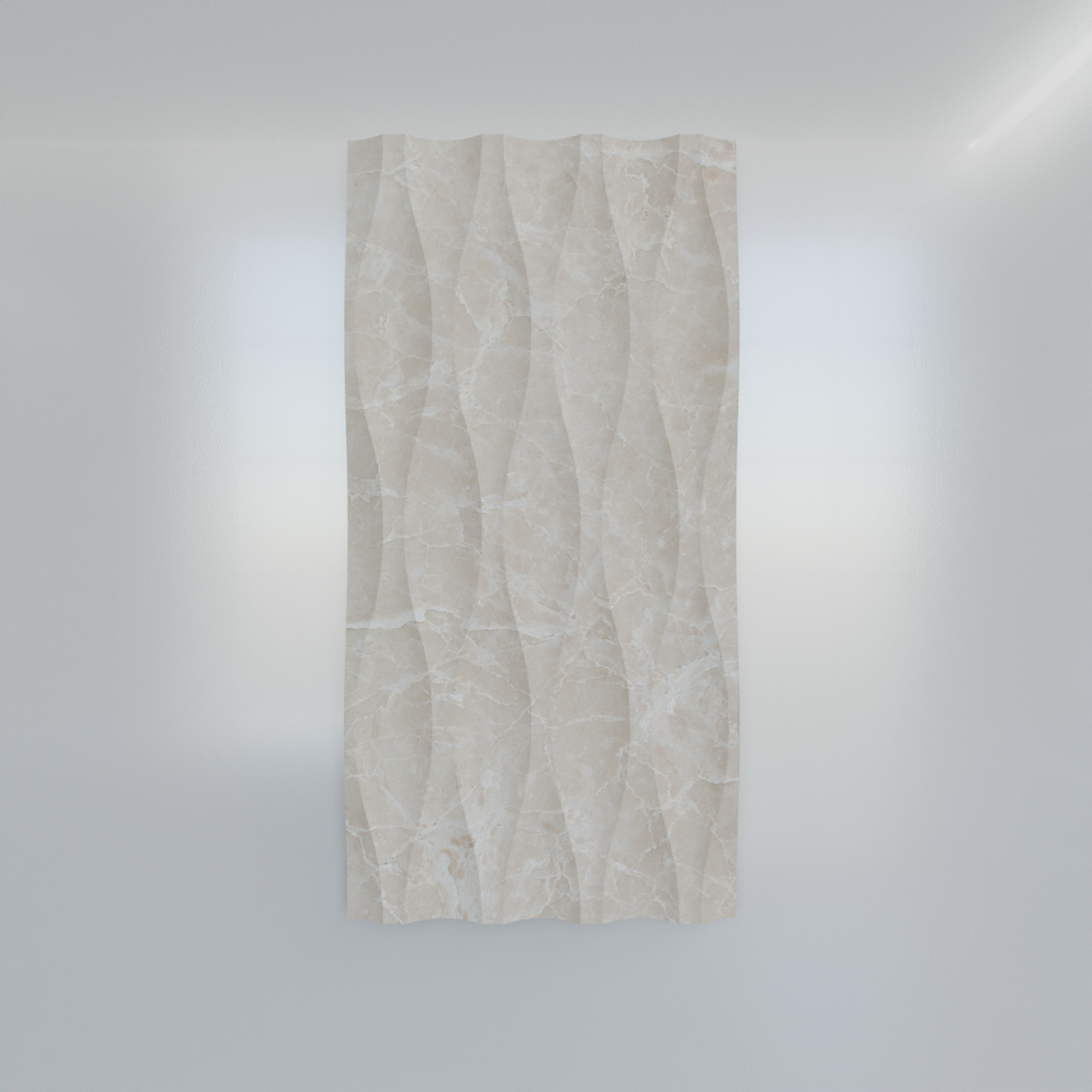
- Feature walls: polished, wave and patterned formats show off the veining.
For finishes side by side, see our guide to stone finishes. For wet areas, see stone in showers.
How do you look after beige marble?
Like any marble: seal it with a penetrating sealer, clean it with a pH-neutral stone cleaner, and keep acids such as vinegar, lemon and limescale removers off it, because they etch the surface. Light beige shows dark stains such as oil and coffee, so wipe spills up quickly. See our guide to sealing and our guide to cleaning.
Beige marble from our factory
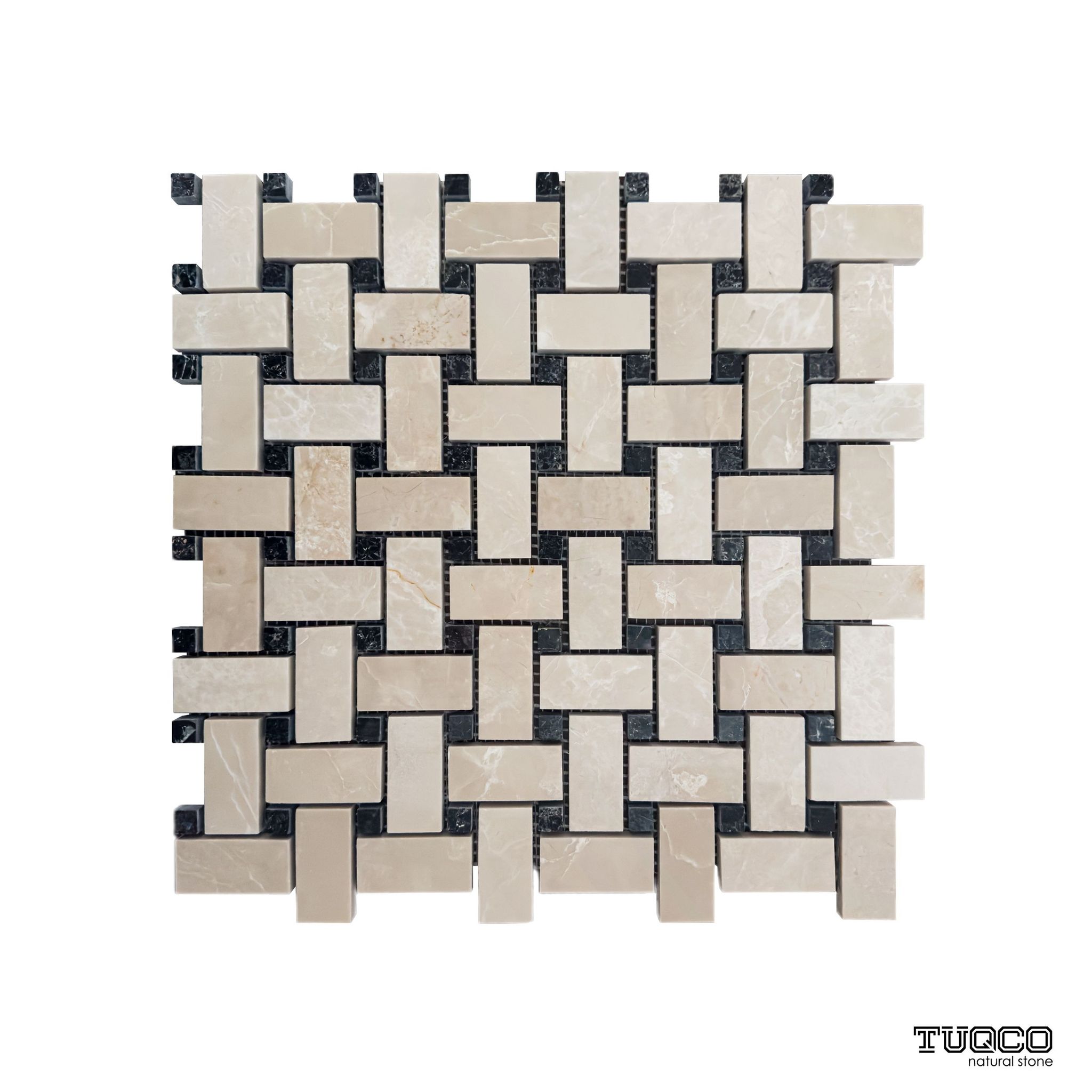
We produce beige marble tiles, wave tiles and mosaics at our factory in Denizli, Türkiye, in polished, honed, tumbled and brushed finishes, in any size you specify, for wholesale and project orders. Tell us the look, format, finish and total area, and we will quote for your specification. See marble from Turkey, marble mosaics and wave tiles for examples of past production.
Comparing stones? See marble or travertine and the pros and cons of marble tile.
Frequently asked questions
- Is Burdur Beige a marble or a limestone?
- It is sold as marble, and commercially it is one: it is quarried in blocks, cut and polished. Geologically, many beige stones are dense limestones; a 2019 study of quarries around Yarışlı Lake in Burdur describes the cream-beige stones there as limestones. Either way it is calcium carbonate, so it is sealed and kept away from acids.
- Where does Burdur Beige come from?
- The name comes from Burdur, a province in south-west Turkey. In the trade it describes a family of light beige stones rather than one quarry.
- Is Light Emperador marble Turkish?
- The name comes from the Spanish Emperador, but most light Emperador on the market is quarried in Turkey. Ours is a Turkish marble.
- Where does Botticino marble come from?
- The name comes from Botticino, near Brescia in northern Italy, where the original stone, a limestone, is quarried. Stones with a similar look are sold under the name elsewhere; our Botticino Fiorito is a Turkish marble.
- What is the difference between Crema Marfil and Burdur Beige?
- Crema Marfil is a Spanish trade name from Monte Coto in Alicante; Burdur Beige is a Turkish one from Burdur. Both are cream to beige stones. Compare the actual samples, because tone and veining vary within each name.
- Does beige marble need sealing?
- Yes. Seal it with a penetrating sealer and clean it with a pH-neutral stone cleaner. Sealing reduces staining; it does not stop acids from etching the surface.
Sources
- Yılmaz, M. and Caran, Ş. (2019), Investigation on geological features and environmental impact of marble areas around Yarışlı Lake (Burdur), Sürdürülebilir Mühendislik Uygulamaları ve Teknolojik Gelişmeler Dergisi 2(1): 57-67
- Dünya, Burdur'da markalaşma sırası turizmde (21 September 2012)
- Oxford University Museum of Natural History, Corsi Collection of Decorative Stones: Botticino fiorito (no. 237)
- European Geosciences Union, Imaggeo: Marble quarry west of Alicante, Spain
- Litos Online, Marrón Emperador marble
- Geology.com, Marble: metamorphic rock
- Natural Stone Institute, Care and cleaning of natural stone